

North Polk Community School District
Building a School District Centered on Students
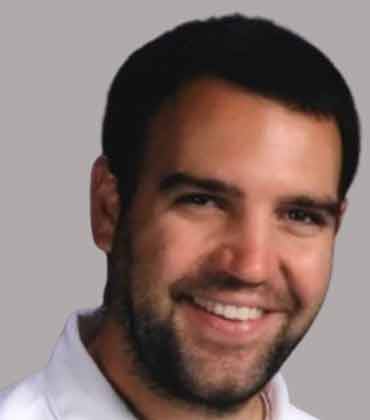
Michael Kline
Michael Kline leads the North Polk Community School District with a focus on how district decisions affect student experience. A former middle school teacher and coach, he moved into leadership to extend impact, applying a hands-on approach grounded in visibility, feedback, and system-level support.
Choosing to Reach More Students
I went into education because I liked working with children.
My first student teaching placement was in a first-grade classroom, where I was tying a lot of shoes and repeating myself more times than I could count. My second placement put me in a middle school, and something genuinely clicked. Middle schoolers are still young enough to be excited about school but old enough for real banter. I spent my first five years teaching middle school math and coaching sports, and I loved it.
What grew was a desire to reach more students. A classroom gives you one set of students, while the administration lets you make decisions that move through an entire district. The potential to affect more kids, to make that ripple go further, drew me toward leadership.
I came to serve as Superintendent of North Polk Community School District in Iowa. Every program, every budget decision, every policy, I am always asking what the end result looks like for students.
Keeping the Best Ideas in the Room
Our mission statement at North Polk is “learning for all by learning from all.” It guides every building, every team and every initiative across the district.
One of the most useful things I learned early came from a mentor, Joe Studding, superintendent of the North Scott School District. He told me, “Be the last person in the room to share your thoughts.” If I speak first, people adjust toward whatever I have said. The knowledge in a room belongs to the room, not to whoever speaks first.
“The legacy I hope to leave is simple—that I cared about children and worked to give them the best experience possible.”
I have never met a good idea I didn’t like, and the best ones rarely start at the top. A parent at one of our School Improvement Advisory Committee meetings pointed out something we had missed. Students interested in early-morning fine arts programs, including show choir, marching band and jazz band, had no reliable way to get to school for them. We had an afternoon activity shuttle for athletics, but no morning equivalent. The suggestion made immediate sense, and we added the morning shuttle.
Meeting Students Where They Are
That care is also evident in how we respond to student needs. A student who does not feel settled and safe will not benefit from academic support, no matter how well it is designed.
Coming off the pandemic, we identified elementary students who were behind grade level and needed support. We added two interventionists per school on top of the one already in place.
At the high school, our principal, Seth Pohlberg, brought a different read. He was seeing a rise in student anxiety, with academically capable students who were not emotionally available to learn. His proposal was to create a student engagement specialist role, a school counselor without a fixed roster of college planning appointments, available for students who needed someone in their corner. We moved forward with it.
Creating Access to Skilled Trades
Not every student is going to a four-year university. That means building real pathways, including into the skilled trades.
When I arrived at North Polk, we had one mobile welder in the entire district. The communities around us have a real demand for skilled welders, and the local industry is actively looking for them. So, when we built our Career and Technical Education (CTE) wing onto the high school, we put in twelve welding booths. We are looking to offer eight sections throughout the day going forward, so students who have never tried it get a chance to find out whether it suits them.
Alongside, we work to build what I call durable skills. Being on time, communicating clearly, listening to understand and collaborating toward a shared outcome—these qualities will carry students into every career, including careers that do not exist yet.
We reinforce them through our Five R's: respectful, responsible, resourceful, resilient and relationships. Our CTE advisory group meets regularly with local business leaders to make sure what we build in school maps onto what the workforce actually needs.
Two Feet In, Always Present
I started out teaching Math, but I always tell people we are really teaching children, not just subjects.
I read in elementary classrooms every fall. I stand at building doors in the morning and greet them by name, using foam knuckles for random fist bumps with students. I also got my commercial driver's license so I could drive a school bus for field trips and activities when the district needed it. When the meeting calendar is heavy, I go sit in the preschool room for twenty minutes.
My four children attend North Polk. That makes every decision personal, and when I evaluate a program or a policy, my honest internal test is whether I would want it for my own kids. Anywhere I am, I am two feet in.
Building Skills That Last Beyond School
We recently passed a district-level AI policy. My position is not to resist these tools and not to hand them over uncritically. I want students to use AI as a starting point and then add their own thinking to it.
When I visit fourth and fifth-grade classrooms, I tell students that we want them to fail at something. Not because failure is the goal, but because grit and the ability to understand what went wrong and try again have to be built. We try to design experiences that require it.
The legacy I hope to leave behind is simple—that I cared about children and worked tirelessly to give them the best experience possible. The morning shuttle, the welding booths, the interventionists, the commercial driver’s license, all of it is in service of that one idea.
Get the best of Education Insider delivered directly to you.
