

University of Utah
Engaging Tomorrows Hospitality Leaders with Experiential Learning
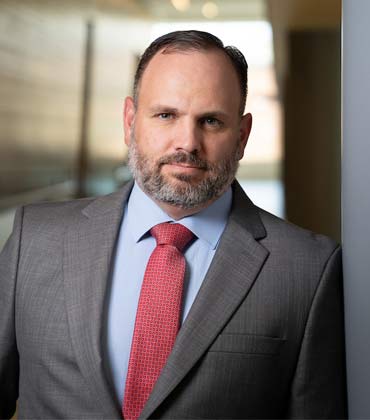
Marc Brown
From a young age, Marc Brown harbored a keen interest in the hospitality industry, taking on various roles in restaurants during his teenage years. Initially planning to pursue a bachelor's degree in business followed by specialized culinary arts training, he ultimately shifted his focus toward restaurant management after an informative interview with an industry leader. He held positions as a general manager in several restaurants before transitioning to the food and beverage director role in a hotel, where he discovered a passion for creativity and menu development. While pursuing his MBA, he concurrently managed the hotel and eventually became its general manager for four years.
An opportunity arose when the hotel owner proposed him to teach as an adjunct, leading to a fulfilling career shift into academia. Over nine years, he taught various hospitality courses, developed new programs and authored textbooks at Utah Valley University. He spearheaded the creation of the Wasatch Resort Management Program, which focused on immersive education in partnership with luxury hotels in Park City. Subsequently, he accepted the role of executive director for a hospitality leadership initiative at the University of Utah, currently in the midst of developing academic offerings and partnerships, notably with the J. Willard and Alice S. Marriott Foundation. They are working together on a strategic plan to enhance hospitality education and applied learning opportunities.
In an interview with Education Insider, Marc Brown underscores the significance of developing applied learning opportunities for students beyond conventional classroom settings.
How do you ensure that your initiatives align with the evolving needs and expectations of the hospitality industry, and how do you anticipate that your initiatives contribute to the broader education mission of the university?
During my tenure at UVU, I focused on developing the hospitality program, particularly the UVU Wasatch Resort Management (WARM) Program, which had a strong industry engagement aspect. We collaborated closely with seven hotel partners, all serving as advisory board members, many holding CEO or general manager positions. They actively recruited our students, participated in classroom activities and provided valuable input to ensure our curriculum remained practical and relevant. Various co-curricular activities were organized to enhance the learning experience.
Students were actively involved in industry interactions and internships outside the classroom throughout the program, ensuring they were well-prepared for careers upon graduation. Post-graduation employment rates were impressive, with many students securing positions in luxury hotels and advancing to supervisory or managerial roles.
Our program at the University of Utah takes a distinct approach, leveraging our R1 institution status and close collaboration with the David Eccles School of Business to explore academic offerings. In addition, our strong connection with the College of Health's parks, recreation, and tourism program enriches our curriculum. The David Eccles School of Business, renowned as a top-ranked business school nationally, further enhances our academic initiatives.
Last year, the University of Utah earned recognition as the top public university in the Western United States, according to the Wall Street Journal. Our institution is gaining prominence for its remarkable innovations and strong emphasis on student engagement. The recent high ranking by the Wall Street Journal underscores our commitment to driving positive student outcomes. We prioritize academic success and ensuring that our graduates exceed expectations in their post-university endeavors. Despite the rising costs of higher education, we offer a competitively priced yet high-quality education that significantly benefits our students.
Only about 40 percent of our students graduate with any debt, and even that is significantly less than what you might find at many other universities, and they leave with an exceptional educational experience.
"Instead of simply inundating students with more information, engaging them in hands-on learning experiences allows for a deeper understanding and retention of knowledge."
What's truly transformative at the University of Utah is the innovative work happening within our centers and institutes. We've essentially redefined the purpose of these entities. While we still prioritize research, we've also established centers and institutes focused on student engagement. Through them, we're crafting applied learning opportunities that extend beyond traditional classroom settings. These experiences ignite curiosity, enabling students to learn and apply their knowledge in novel and meaningful ways. This approach enhances their academic journey and sets them apart upon graduation.
At the University of Utah, a prime illustration of our commitment to fostering entrepreneurship is the Lassonde Entrepreneur Institute. Located within Lassonde Studios, this institution utilizes a residential building spanning four floors. The ground floor features a maker space and incubation areas tailored for new students, along with communal spaces designed for student interaction. Emphasizing entrepreneurship, the entire environment is accessible to students round the clock, providing a fully immersive experience. This setup facilitates easy access to resources and fosters connections among aspiring student entrepreneurs. With approximately 30 programs operating within the institute and Lassonde Studios, it is a compelling model showcasing our university's shift towards utilizing centers and institutes to enhance student engagement.
What advice would you offer fellow peers or aspiring hospitality leaders interested in pursuing a career in educational tours and travels?
Thanks to technology, we're currently in an era where information is abundantly available at our fingertips. With smartphones and the internet, students and faculty can instantly access a vast array of information. This trend is only going to intensify with the advancement of artificial intelligence.
As educators, we face a choice in how we approach teaching. One option is to focus on providing students with information that isn't readily accessible, diving deep into our subject matter to offer profound knowledge. Alternatively, we can shift our focus towards experiential learning opportunities and find ways to engage students with the information we're teaching.
The latter approach is more effective. Instead of simply inundating students with more information, engaging them in hands-on learning experiences allows for a deeper understanding and retention of knowledge. We can provide a more well-rounded education by incorporating co-curricular and experiential learning methods.
This approach is proving successful at the University of Utah, where we prioritize engaging students through practical learning experiences.

Get the best of Education Insider delivered directly to you.
