

Arlington Public Schools
Building Strong School Communities around Student Success
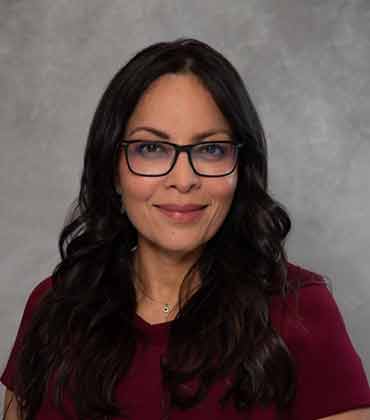
Liza Aldana-Broughman
Dr. Liza Aldana-Broughman is a principal with Arlington Public Schools, leading Claremont Immersion School since 2023. She previously served as an APS teacher, assistant principal and principal, advancing student achievement, access and supportive school environments
Using Data and Collaboration to Drive Student Achievement
Data is most powerful when it leads to action. Our responsibility is to help teams understand what assessment, attendance and student well-being data reveal about students and determine what we will do differently as a result.
I lead Claremont Immersion School, a diverse, multicultural dual-language community where approximately 40 percent of students are English Learners and 16% receive special education services. Our students bring varied languages, cultures, strengths, experiences and learning needs, making intentional access, differentiation and high-quality instruction essential.
We have created shared ownership of data, with teachers, coaches, specialists and administrators examining academic, language development, attendance and social-emotional indicators together. We identify strengths and opportunity gaps, determine which students need support or acceleration, examine effective instructional practices and monitor implementation and impact.
That discipline has produced measurable results. Our most recent SOL results reached 84% in mathematics, 80 percent in reading, 81 percent in science and 97 percent in Virginia Studies, with science achievement increasing 16 percentage points over two years. Claremont also earned Distinguished Accreditation, while chronic absenteeism declined from approximately 19 percent to just over 5 percent.
These results reinforce an important principle: student demographics should inform how we provide access and support, never the ceiling of our expectations. Academic achievement and whole-child development are interconnected. When teams use multiple data sources, act collectively and monitor impact, we respond more effectively to the individual child behind the numbers.
Building a Culture of Professional Learning and Continuous Improvement
Improvement cannot depend on isolated professional development or the principal having all the answers. It requires structures that allow educators to learn from data, research-based practices, coaches and one another.
In a dual-language school serving students with varied linguistic and learning needs, collaboration is essential. I have prioritized building the capacity of instructional leadership and coaching teams so expertise is distributed throughout the school. Coaches should be partners in strengthening instruction, while administrators must remain connected to classrooms, provide meaningful feedback, monitor implementation and remove barriers.
A strong professional culture requires both trust and accountability. Continuous improvement means examining our practices, acknowledging what is not working, learning from one another and adjusting. When educators collectively embrace that responsibility, improvement becomes part of the culture rather than another initiative.
Strengthening Family and Community Partnerships
Families are not an audience for our work; they are partners in it. As an immigrant and bilingual educator leading a multicultural school community, I understand that families may face linguistic, cultural, or systemic barriers while remaining deeply invested in their children's education. Schools must remove those barriers rather than expecting families to navigate them alone.
At Claremont, Family and Community Engagement (FACE) is grounded in access, listening and shared responsibility. We communicate across languages, create multiple opportunities for participation, seek family voices and feedback and use engagement and school climate data to identify strengths and areas for growth.
“When educators collectively embrace that responsibility, improvement becomes part of the culture rather than another initiative.”
Our reduction in chronic absenteeism from approximately 19 percent to just over 5 percent demonstrates the connection between family partnership and student outcomes. Achieving that progress required understanding barriers, communicating with families, coordinating support and treating attendance as a shared responsibility. Trust is built through consistent actions. Families need to know that we will celebrate their students, listen to their concerns, communicate honestly and maintain high expectations.
Developing Empowered and High-Performing School Teams
Developing other leaders is one of the most important responsibilities of a principal. Sustainable school improvement cannot depend on one person. My responsibility is to create conditions in which assistant principals, coaches, teacher leaders, specialists and staff understand what we are trying to accomplish and why, while having the knowledge, authority, support and accountability to lead that work.
I believe in giving people meaningful leadership opportunities while remaining clear about expectations and outcomes. Empowerment without accountability does not build capacity and accountability without support does not build leaders. High-performing teams need both.
Our results at Claremont reflect educators assuming collective responsibility for instruction, intervention, student well-being, family engagement and continuous improvement. Ultimately, leadership is measured not simply by what happens while you lead an organization, but by whether you develop people and systems capable of sustaining excellence beyond you.
Balancing Excellence, Well-Being and Community Needs
I would challenge the assumption that these priorities must compete. Academic excellence is difficult to sustain when students do not feel safe, known, challenged and supported. Student well-being cannot be separated from rigorous, high-quality instruction and neither can be achieved without families and communities.
Leadership requires keeping these priorities connected and making courageous decisions. Listen carefully, study the evidence, seek people who challenge your thinking and be transparent about what is working and what needs improvement. Make decisions based on what students need, not what is easiest or most comfortable.
Most importantly, never allow language, disability, socioeconomic circumstances, race, culture, or previous performance to determine the ceiling of what you believe students can achieve. A diverse school community does not require lower expectations; it requires more sophisticated approaches to helping every student reach them. For me, that remains the heart of educational leadership: believing deeply in what students can become and building the people, systems and partnerships that help them get there.

Get the best of Education Insider delivered directly to you.
