

French International School of Philadelphia
Building a Mission Aligned International Learning Community
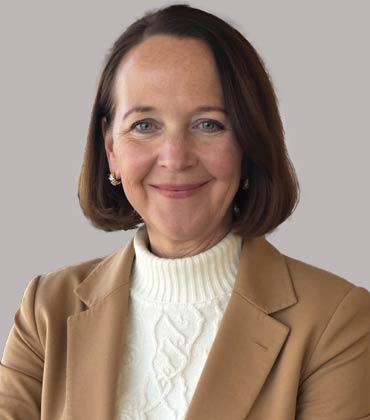
Kathy Kotchick
Kathy Kotchick is the Head of School at the French International School of Philadelphia, a dual-accredited French immersion institution. She began her career as a public-school teacher in Baltimore, specializing in collaborative learning and teacher training. Her leadership spans technology integration, program innovation, admissions and community engagement in international education.
In this interview, Kotchick shares how she leads the French International School of Philadelphia as a dual-accredited French immersion community. She discusses staying close to classrooms to keep learning mission-aligned, using assessments to guide year-on-year progress, expanding hands-on science and arts and adopting technology and AI only when it clearly supports learning and student wellbeing.
Leading a Dual Accredited School with Clarity
As Head of School, much of Kotchick’s work is outward-facing. She is deeply involved in admissions, marketing, philanthropy and board engagement, while remaining closely connected to curricular direction and program innovation. Because the school is accredited by both the French Ministry of Education and the Middle States Association, her role also includes ensuring continued alignment with the expectations and standards of both systems. This includes ongoing review of materials, classroom practices and program structures to remain compliant with dual requirements.
“Consistent observation and circulation through the building ensures that the day-to-day learning experience reflects the educational model we promise and the mission we stand for.”
The school’s dual accreditation is central to what makes its model distinctive. Students can enter the program and transition seamlessly either to a school in France or another French-speaking country, or into an American school environment. Protecting that continuity requires consistent attention academically, operationally and culturally so that the program remains both model-matched and mission-matched. Kotchick also recruits families and travels to French-speaking countries to recruit native French teachers, while identifying high-level English teachers for the American portion of the program.
This is also why one of the most important ways Kotchick stays grounded is by being present on both campuses and in classrooms each day. Leadership can easily become dominated by board work, financial planning and operational decision-making. For her, consistent observation and circulation through the building ensures that the day-to-day learning experience reflects the educational model the school promises and the mission it stands for.
Assessment, Growth and Faculty Alignment
The school is deeply anchored in assessment through multiple methodologies because of its accreditation structures. Day-to-day observation, running records and one-on-one communication with students are essential, as is consistent collaboration with parents. Those touchpoints help the school understand performance and identify individual strengths and areas of need.
To complement that day-to-day picture, the school also relies on standardized assessments. It administers the ERB and the French Ministry of Education national exam. Faculty review how students performed in the current year, compare results to the prior year and set goals for the following school year. Results are examined collectively by faculty and staff to determine next steps and instructional priorities.
Innovation with Intent for Modern Learning
In 2023, the school completed a major campus expansion for its upper campus, grades four through eight. It transitioned from a one-building campus to a three-building campus that includes a Center for Science and Innovation, a large Art Center and expanded outdoor space. This expansion supported the introduction of new program elements and expanded opportunities for hands-on learning and creative expression.
With the new campus came meaningful program growth. An artistic component was added, led by a mural artist in Philadelphia who conducts workshops with students. Alongside visual arts, the music program expanded and the Center for Science and Innovation created stronger pathways for experimentation and inquiry-based learning.
That same commitment to authentic learning shapes the school’s approach to global exposure. A middle-school exchange was launched with a partner school in Lyon, France. Eighth-grade students connect with their partners throughout the year, host them for three weeks and later travel to Lyon for a school-based internship experience. In a language-based school, this strengthens fluency and cross-cultural engagement at an earlier stage than is typical.
Purposeful Choices for Student Wellbeing
As programs and opportunities expand, the school remains attentive to the everyday conditions that support learning. One initiative the Head of School is especially proud of is the lunch program, locally sourced, healthy and internationally diverse, led by a chef who understands the community and supports student wellbeing as part of the school experience.
The same mindset applies to technology. The school takes a deliberate approach. It is a no cell phone, no Apple Watch and no personal electronics school during the day. Devices are secured upon arrival so that any tech exposure is guided intentionally by educators. Technology and AI are integrated only when they directly support learning goals. For example, she observed students generating poetry themes and then using AI to craft poems in the style of Black American poets for Black History Month.
At the same time, digital tools are balanced by protecting space for learning without technology. Resource centers are full of books in French and English, and on the upper campus there is also a Spanish component beginning in grade four, supported by a trilingual library. Significant time is spent reading, discussing and creating with language directly.
That same belief in thoughtful, disciplined choices also shapes how she approaches leadership. Post-pandemic, she notes that parents, teachers and students require different forms of support, particularly around social emotional learning and communication. For leaders navigating change, she emphasizes patience, genuine buy-in from those most impacted and keeping ego in check. If a program is not working, adjusting course is strength. She also underscores the importance of staying connected to other school leaders, because the shared challenges of supporting students, families and educators are easier to meet through collaboration, perspective and a steady sense of humor.

Get the best of Education Insider delivered directly to you.
