

American Paradigm Schools
Rebuilding Special Education as a Student-First System
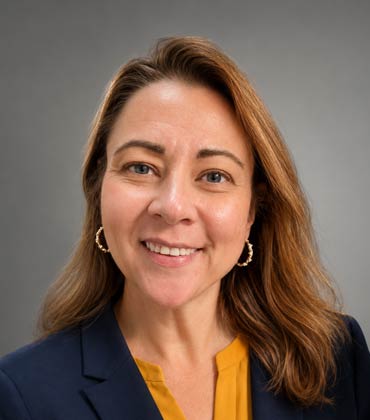
Elaine Latimer
A System Under Pressure
Special education in the United States is at a critical point. The post-COVID learning has driven a significant increase in the number of students being identified as needing special education services. Much of this increase is due to the substantial academic gaps created by the loss of instructional time during the pandemic. It significantly delayed progress for many students, the effects of which continue to be evident now as the learning loss that has never truly recovered back to the baseline.
At the same time, the current educational climate does not always reflect a deep understanding of what students with special needs require. Nor does policy consistently attend to those needs with the urgency they demand.
Compounding the challenge is a national shortage of educators, and special education teachers are among the hardest hit. Teachers are leaving the field at a rapid rate, and too few are entering it.
For school leaders, this creates a dual challenge—retaining the existing staff through investment and support, while finding new and innovative ways to recruit career changers and professionals willing to bring their diverse skills into the classroom. The ability to deliver a full continuum of services to students with Individualized Education Programs (IEPs) depends, more than anything else, on having the right people to do the work.
Making Every Classroom Work
At Lindley Academy Charter School, the response to the growing demand for inclusive and individualized instruction begins in the classroom itself.
We implement a full co-teaching model that places a special education teacher alongside a general education teacher in almost every classroom. This ensures that students are never separated from the rigor and community of the general curriculum. We support that with ongoing data review, tracking student progress, adjusting IEPs and making changes when the evidence points toward a better path.
Delivering that level of co-teaching also means managing the compliance infrastructure that runs parallel to every lesson. Compliance demands in special education are highly significant. IEP timelines, documentation, and regulatory obligations add to the core work of teaching, creating a substantial burden for educators. The most effective teachers find ways to monitor progress during instruction, not in place of it. Whether through a desk poster, a tally system, or automated technology, the goal remains to protect time and energy for direct teaching.
The teachers who manage compliance, deliver curriculum with fidelity and build sincere relationships with students are extraordinary. They work endless hours because they love the work and their students. The least institutions can do is build systems that make that work sustainable.
“The student should always come first. Every decision in special education that is made with the student genuinely in mind is the right one.”
Our school has taken steps to make all this possible. The result is Lindley Academy becoming the recipient of the Exceptional Charter School in Special Education by the National Association of Special Education Teachers (NASET) for the last four consecutive years. The accolade is reserved for charter schools that demonstrate outstanding commitment, dedication and achievement in special education while meeting rigorous professional criteria.
Collaboration and Trust with the Student at the Centre
A common misunderstanding about special education is the assumption that students with special needs cannot learn. This belief shuts down opportunities before they even start. In reality, every child can learn. The real question for educators is not if a student can succeed, but which path will help them get there and what strengths can support their progress.
In my experience, getting that right requires more than strong individual teachers. It requires the proverbial village. Families, community service providers and educators all bring different and equally valid perspectives to a child’s development.
A parent knows their child in ways a school cannot. A school sees that child in an environment a parent may never witness, as they navigate peers, teaching demands and social complexity for eight hours a day. Both perspectives are essential. The only productive approach is to bring every voice to the table, acknowledge where perspectives differ and move forward in the shared interest of the student.
That kind of collaboration is not built quickly. It is built through consistent communication, demonstrated trust and the genuine belief that every party in the room is there for the same reason. When schools, families and community providers approach one another as partners rather than adversaries, students receive what they actually need. When they do not, everyone loses, and the student loses the most.
Technology, Policy and What Comes Next
Technology has transformed special education in ways we could not have imagined ten years ago. Now, most data collection happens automatically, without requiring direct interactions with students. Platforms track student progress, create visual reports for families and teachers and highlight trends that help guide teaching decisions right away.
This efficiency matters because it gives teachers more time with students instead of paperwork. Technology cannot replace the value of working face-to-face with a child, but it can take away some of the paperwork that gets in the way.
The policy environment, however, has not kept pace. The Individuals with Disabilities Education Act (IDEA) has not been reauthorized in over twenty years. In a field that has changed profoundly in that time, the legal framework that shapes every IEP, placement decision, and compliance requirement stays largely unchanged. Reauthorization of IDEA would be the single most impactful policy development the field could see. Until that happens, schools must follow the law with fidelity while advocating for the legislative attention that the students deserve.
The work of special education is ultimately in service of one principle—the student is always first. Every decision that is made with the student genuinely in mind is the right one. It is a standard simple enough to remember and demanding enough to spend a career pursuing.
Get the best of Education Insider delivered directly to you.
