

Irving ISD
Leading from Within with Purpose, Equity and Lived Experience
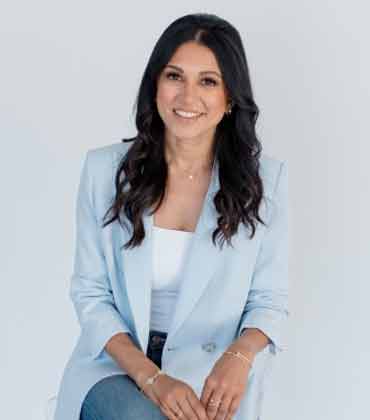
Dr. Magda A. Hernandez
Some leaders shape districts; others are shaped by them first. Magda A. Hernández is the latter. Beginning as a bilingual paraprofessional, she rose through Irving ISD to become Superintendent in 2018. Her leadership, grounded in equity and community, reflects deep experience and a steadfast belief in the transformative power of public education. She believes schools succeed when every student feels seen, supported and aligned around purpose and that public education, at its best, is the infrastructure of opportunity for every community it serves. That conviction, rooted in relational depth and a genuine closeness to the families of Irving ISD, is the emotional anchor of everything she does. Here is our conversation with her.
The Ground that Grew Me
I did not enter education through a graduate program or a leadership pipeline. I started as a bilingual paraprofessional inside the very district I now lead, and that beginning was not incidental to my leadership. It was foundational to it. Standing in those classrooms, watching what families trusted us with each morning, I understood early that this work was never abstract. It was personal, immediate and consequential in ways that no policy document could fully capture.
Moving from the classroom into campus administration, then into human resources and eventually district leadership, each role sharpened something different in me. I learned how decisions made far from a classroom still land squarely inside one. I learned that systems either support people or quietly exhaust them, and that the difference usually comes down to whether the people designing those systems have ever sat where the students sit. That perspective travels with me into every room I walk into as superintendent.
When I took on this role in 2018, I was not arriving to reimagine Irving ISD from the outside. I was returning to something I already understood deeply, choosing to protect what was worth protecting while pushing hard on what needed to change. That is a different kind of leadership than most people expect at the district level. But I believe it is the right kind for a community like ours. And that understanding of what this community has entrusted to us is precisely what makes equity not a policy priority but a personal obligation.
Equity is not a Program but a Practice
One thing I have never been comfortable with is the version of equity that lives only in a strategic plan. It sounds right, reads well and does very little. Real equity shows up in how resources move, how programs are designed and who gets access to what. In Irving ISD, we have students who arrive with tremendous need and tremendous potential in equal measure. My responsibility is to make sure the system sees both.
“Real equity shows up in how resources move, how programs are designed and who gets access to what.”
We have worked to expand access to advanced coursework, close achievement gaps identified by data, and provide targeted support to students who need it most. That last part requires ongoing honesty. Data will tell you where the gaps are, but it takes courage to reallocate resources in response to what you find, especially when doing so means some programs receive less, so others can receive more. I have never found that to be a comfortable conversation. I have always found it necessary.
The partnership I have with our Board of Trustees makes that kind of decision-making possible. I am genuinely fortunate to serve alongside a Board that leads with heart and an unwavering commitment to students. When values are shared, and trust runs deep, the district can move with integrity even when the decisions are difficult. That alignment is not something I take for granted. It is something I work to earn every single day. I am incredibly fortunate to serve alongside a Board that truly loves our students and this community. Their support allows us to focus on what matters most, doing what is right for kids. But equitable access alone is not enough—what happens once students are in the room matters just as much.
What Learning Actually Requires
Academic performance matters enormously to me, but I have never believed that a test score tells the full story of a student. Learning happens when students feel that the work they are doing connects to something they can see in their own future. That conviction has driven our investment in Career and Technical Education pathways and our focus on college readiness programs that are genuinely rigorous rather than performative.
We track graduation outcomes, student growth, alongside achievement and how prepared our graduates say they feel for what comes next. The goal is not simply that students finish. It is that they finish with real options and the confidence to pursue them. Numbers are useful guides, but the feedback we receive from students and families has shaped our practice just as much. When a student tells you that a class changed how they see themselves, that is data too.
The 2023 bond passed by our community was a direct investment in that vision. It was Irving ISD's first bond in 16 years, and the community said yes. To me, that vote was not just about buildings. It was a statement of trust. People believed that this district would use those resources wisely and in the service of students. We have taken that responsibility seriously from the moment the results came in.
Well-Being is Where Achievement Begins
For a long time, education systems treated well-being as something separate from academic success, a nice addition when budgets allowed. I have never accepted that framing. If a student is not safe, seen and supported, no curriculum in the world will reach them. The same is true for the educators and staff who show up every day to do this work. You cannot sustain excellence in a system that does not take care of the people running it.
The opening of the Magda A. Hernández Institute of Wellness and Professional Learning was one of the most meaningful moments of my tenure. It sent a clear message to every person in this district: your well-being is not separate from your purpose; it is part of it. We have built professional learning structures that help educators grow not just in their craft but in their capacity to sustain that craft over a long career.
I am open with my team about practicing this myself. Time with family and moments of quiet, intentional rest are not luxuries. They are how I show up better the next day. When I speak to staff about self-care, I am not reading from a script. I am sharing something I have learned the hard way, that the work is only sustainable when the person doing it is also being taken care of. That steadiness becomes especially important when the work stops being comfortable, and in this role, there are periods when it does not remain so for long.
Leading When There are No Easy Answers
Declining enrollment, funding pressures, shifting student needs, these are the structural realities of public education right now, and every superintendent in the country is navigating some version of them. What I have found is that how you communicate in those moments matters as much as the decisions themselves. People can handle uncertainty far better than they can handle the sense that someone is managing them.
I choose transparency over reassurance. When I do not have a clean answer, I say so. When constraints are real, I name them. Trust is built through clear communication and follow-through, and it erodes the moment people sense that the full picture is being withheld. I have tried to hold that standard even when it would have been easier to smooth things over.
Difficult periods have a way of clarifying values. Every challenge I have faced as superintendent has confirmed rather than changed the way I lead. Purpose first. People at the center. Consistency when conditions are anything but stable. That is not a philosophy I arrived at in a leadership seminar. It is one I have lived my way into, decision by decision. That clarity is also what shapes where I want to take this district next.
Focus on the District and the Field
My focus for 2026 and beyond is not complicated, though it requires relentless attention. I want Irving ISD to be stronger, more equitable and better prepared for a changing world than it was when I arrived. That means deepening early learning investments, continuing to build meaningful career pathways rather than performative ones, and maintaining the kind of trust with families that makes everything else possible.
I also think about what public education needs beyond any single district. We need more leaders who understand the communities they serve from the inside, not just in theory. We need policies that reflect the real complexity of what schools are being asked to do. And we need to keep making the case, clearly and consistently, that public schools are not just institutions. They are the infrastructure of opportunity, and they deserve to be treated that way.
To anyone coming up in school leadership, I would offer this: get close to the work before you try to lead it. Understand what it costs a family to trust a school with their child. Understand what it takes for a teacher to show up fully on a Tuesday in March when the year feels long, and the support feels thin. When you lead from that understanding, the decisions you make are different. They are more honest, more human and more likely to help. That is the kind of leadership this field needs more of. It is the only way I know how to do it. I often close my messages to our community with a simple phrase: “I love you.” It is not symbolic. It reflects how deeply I care about every student, educator and family I serve and why I consider it an honor to lead alongside people who show up for students every single day.
Get the best of Education Insider delivered directly to you.
