

Marengo Union School District 165
Building Success Through Strategic, Service-Driven Leadership
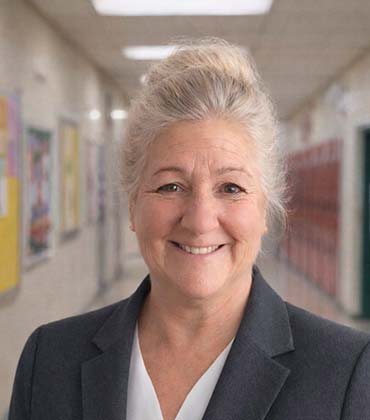
Dr. Lea Damisch
Lea Damisch is a seasoned leader with extensive experience in education. Now in her 18th year as superintendent, she balances organizational alignment, fiscal responsibility, and student success. She remains directly engaged across district operations, from curriculum and Title I to finance, transportation, and daily operations. A lifelong member of the Marengo community, she is deeply committed to student success, staff development, and building strong partnerships between schools and families.
A Leadership Path Shaped by Analysis and Education
I entered education as a second career. I began my professional life in the private sector as a systems analyst at Allstate Insurance Company, where my work centered on business analytics and data-driven decision making. I earned an MBA while working there, and mathematics and analysis were at the core of the work I did.
My transition into education began gradually. I started substitute teaching, served as an adjunct professor, and worked as a special needs tutor in math and statistics at a local college. Those experiences confirmed that education was where I wanted to invest my career. I earned my teaching credentials and began teaching middle school math and science.
“When leaders remain visible and engaged, it builds credibility and reinforces a culture where everyone contributes.”
Leadership roles followed soon after. With the exception of one year, I have spent my entire career at Marengo Union School District 165, the same district where my mother taught first grade. Today I am in my 18th year as superintendent, serving approximately 1,200 students from pre-kindergarten through eighth grade.
My academic journey includes a bachelor’s degree, an MBA, a master’s in teaching, an educational specialist degree, and a doctorate in education. That long academic path reflects my love for learning and how vital education is to leadership.
Analytical Thinking in Service of Students
My background in analytical discipline still shapes the way I approach decision-making today. When I evaluate decisions for the district, I begin by asking how they will impact teaching and learning. I examine the supporting evidence, the costs involved and the long-term financial implications. I also evaluate how decisions align with state and federal regulations.
This process draws heavily on data analysis, trend evaluation and systems thinking. I use multi-year financial forecasting, zero-based budgeting and enrollment projections to ensure the district remains financially stable while continuing to prioritize student outcomes.
Public education presents unique financial realities. Unlike the private sector, revenue streams are largely determined externally. Funding levels are often fixed, and districts must operate within those limits. Compliance with regulations is required, but those requirements do not always come with funding.
My responsibility is to ensure that regulatory obligations are met while protecting resources that directly support student growth and achievement. Every decision ultimately returns to one question: Will this support our students?
Hands-On Leadership in a Small District
Marengo Union School District 165 operates without assistant superintendents. That structure requires both breadth of knowledge and trust in the people who manage daily responsibilities across the district.
Hands-on leadership does not mean micromanaging every detail. It means understanding the work, asking the right questions and maintaining alignment between departments so that operational decisions support instructional priorities.
At the same time, I remain deeply involved in district life. I stay informed about curriculum implementation, financial planning and operational systems, and I maintain close communication with principals and staff.
Time is the greatest constraint in this type of leadership model. There are only so many hours in the day. While technology makes it possible to stay connected constantly, I believe leaders must also model balance. If I am always working around the clock, it sends the message that everyone else should do the same. Sustainable leadership requires clear boundaries as well as commitment.
Trust Built Through Community Presence
My connection to this district extends far beyond my professional role. I am a lifelong member of the Marengo community. My children were educated here, and now my grandchildren attend our schools.
Living and working in the same community creates a different kind of accountability. Families see me not just as a superintendent but as a parent, grandparent, church member, and community participant. I attend school activities, sporting events, and local gatherings, and I maintain regular communication with families and staff through weekly updates.
I work closely with our board of education through open communication and shared goal-setting. Before major decisions reach a public vote, board members are informed about the data, the potential implications and the reasoning behind the recommendation.
I also serve in leadership roles with the Illinois Association of School Administrators and participate in meetings with the state superintendent several times each year. Those connections allow me to advocate for our region while bringing state-level insights back to our community.
Trust develops over time through visibility, transparency and consistency. Remaining engaged in the community helps reinforce that trust.
Building Talent from Within the Community
The strong community connection also shapes our hiring approach. More than 75 percent of our staff members live within the district, fostering a sense of collective responsibility for student success.
One of the most rewarding aspects of leadership is hiring former students. Many now work as teachers, paraprofessionals, technology staff, and administrators. They understand the culture, traditions, and expectations of the district because they experienced them firsthand.
“If a tool improves instruction, increases efficiency, or enhances student engagement, we consider it. If it adds complexity without a clear benefit, we modify or scale it back. Technology should support learning, not drive it.”
We also focus on developing talent internally. Mentoring programs, leadership development opportunities, and clear pathways for advancement help staff grow throughout their careers.
At the same time, working in such a close-knit community requires clear professional boundaries. Relationships cannot compromise fairness or expectations. When conversations about performance are necessary, I make it clear that the discussion is professional, not personal. Applying the same standards to everyone protects both the organization and those relationships.
Rebalancing Technology in the Classroom
Technology has significantly influenced education in recent years, particularly during the COVID-19 pandemic. We rapidly implemented one-to-one device programs to support remote learning.
While those tools were necessary at the time, we also observed that some students struggled to remain engaged. In response, we made a deliberate decision to rebalance our approach.
Today, technology remains available through platforms such as Google Classroom and other digital tools, but it is no longer the primary method for completing schoolwork. Teachers use traditional instructional methods such as paperand-pencil work to support engagement and foundational skill development.
When evaluating new technologies or programs, I focus on clear outcomes. If a tool improves instruction, increases efficiency, or enhances student engagement, we consider it. If it adds complexity without a clear benefit, we modify or scale it back.
Technology should support learning, not drive it.
A Strategic Shift in Literacy Instruction
Several years ago, I noticed a concerning trend in our district. Increasing numbers of students were struggling with reading and required intensive interventions. Despite strong instructional practices and supplemental programs, the data showed limited improvement.
After analyzing the information and evaluating instructional methods, we adopted a classical phonics-based curriculum called Literacy Essentials from Hillsdale College.
The program focuses on systematic phonemic awareness, teaching students to recognize sounds, connect them to letters and build reading skills step by step.
It does not rely on technology, presentations or digital tools. Instead, it focuses on structured instruction that builds foundational reading skills through repetition and mastery.
Moving in this direction required courage because it ran counter to prevailing trends that favored highly digital instructional programs. Some educators initially questioned whether the approach would feel outdated. Implementation required patience, teacher support and ongoing communication.
Now in the second year of the program, we are already seeing promising results. First-grade students are demonstrating strong reading confidence and comprehension earlier in the school year than before.
For me, the initiative reflects an important leadership principle. Effective leadership requires identifying challenges, making evidence-based decisions and guiding implementation until measurable outcomes appear.
Servant Leadership and Long-Term Impact
The leadership philosophy that guides me most closely is servant leadership. Early in my career, I encountered a short pamphlet on the concept, and its message stayed with me. A leader should never consider any task beneath them.
That belief shapes how I approach my role. I spend time in classrooms, evaluate instruction, and help wherever needed. If we are short-staffed in the cafeteria, I will work the serving line. If additional help is needed elsewhere, I step in.
When leaders remain visible and engaged, it builds credibility and reinforces a culture where everyone contributes.
When I think about the long-term impact of my leadership, I do not focus on individual recognition. I imagine a future where the district continues to thrive because of strong systems, a collaborative culture, and leaders who emerge from within the organization.
If the legacy of my work reflects shared ownership, strong relationships, and a continued focus on student success, then the district will remain strong long after my tenure ends.
Get the best of Education Insider delivered directly to you.
