


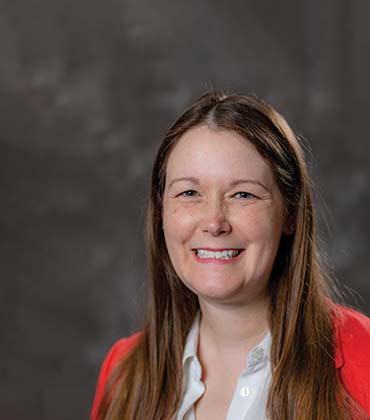
 Dr. Laura Lowder, Director & Curriculum Coordinator
 At Scholars Academy, an accredited K–12 school offering real-time online education, the answer begins with a simple observation. Students do not disengage because they lack ability. They disengage when they feel unseen, unsupported, or out of sync with how they are being taught.
That insight has shaped Scholars Academy’s model, which centers on live, teacher-led small-group learning where interaction is continuous and instruction adapts in real time to each student’s needs. Instead of asking students to fit into a fixed system, the system adjusts to them academically, socially, and emotionally.
In these small Zoom classrooms, typically consisting of five to fifteen students, learning is not passive. Teachers are able to read subtle cues, respond immediately, and build the kind of trust that allows students to take risks. Peer interaction becomes part of the process rather than a distraction from it. Over time, that environment changes how students engage. They participate more, persist longer, and begin to see themselves as capable learners.
Students are often taught directly by Dr. Lowder herself and are affectionately referred to as “Dr. Lowder’s kids,” benefiting from the guidance of a career educator who holds a doctorate in education from the University of Florida and brings more than decades of experience across K–12 and higher education. This focus on relationships first and instruction second underpins every part of the Scholars Academy model.
Why Relationships Come Before Learning
For Dr. Laura Lowder, that insight was both professional and personal. As a university educator training future teachers and a parent of six children, she saw firsthand how traditional classrooms often fail to support students who do not fit a standard pace or structure. Scholars Academy emerged from that realization, a model designed to meet students where they are through real-time interaction, flexibility, and relationships that make learning possible.
 Unlike asynchronous models, this structure is intentionally interactive. Teachers are constantly observing and responding to academic performance, subtle shifts in confidence, hesitation, and energy. Over time, these interactions build trust. Once trust is established, students begin to work harder, ask questions freely, and stay engaged longer because the environment supports risk-taking.
As the model continues to gain visibility among families seeking alternatives to traditional education, Scholars Academy has been recognized as a Top Online Private School, an acknowledgment that reflects both its academic outcomes and its commitment to highly individualized learning.
Individualization Instead of Standardization
One of the most significant departures from traditional schooling is how students are placed. Age-based grading is replaced with skill-based placement across subjects. A student might be advanced in mathematics while requiring additional support in writing, and the system accommodates both without friction.
Progress is also measured differently. While grades are still issued for formal reporting, they are not the primary driver of learning. Instead, every student receives weekly “Glow and Grow” reports every Friday from each core subject teacher. These reports provide specific, narrative feedback about where the student is excelling and where further growth is needed.
“We try to deemphasize the external motivation of ‘do this, get an A,’” Lowder explains. This shift requires an adjustment period for families accustomed to traditional grading systems. Over time, however, students move away from chasing grades and begin focusing on progress, effort, and mastery.
Supporting Gifted and Twice-Exceptional Students
A large portion of the student body consists of gifted learners who also have learning differences such as dyslexia, ADHD, or autism. Many arrive carrying more than academic gaps. They arrive with the weight of past experiences, having been corrected more often than understood and disciplined more often than supported.
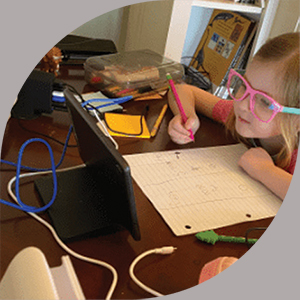 At Scholars Academy, that narrative begins to change. Teachers receive ongoing, in-house professional development specifically focused on working with neurodiverse learners, an area in which many traditional systems lack specialization.
Dysregulation, which is common among students with autism or ADHD, is handled differently. Instead of public correction, intervention happens quietly and immediately through a private Zoom chat message, a suggestion to step away briefly, or a real-time message to a parent. In most cases, the rest of the class remains unaware that anything has happened. This creates what Lowder describes as a “no-escalation loop.” Students are able to regroup without attention being drawn to them, reducing stress and preventing behavioral cycles from intensifying. Over time, as students feel safer, these episodes become less frequent, and students begin regulating themselves more effectively.
Learning That Fits the Student
The academic structure reflects the same principle: learning should adapt to the student, not the other way around. Subjects are often integrated rather than taught in isolation. Reading, writing, history, and science are connected, allowing students to engage with ideas in a way that feels relevant and cohesive.
Students might read literature tied to historical events and then explore the broader context behind those events. When studying topics like the Holocaust or Hiroshima, the work carries both emotional and intellectual weight.
“They’re not asking, ‘Why do I have to do this?’” Lowder notes. “They already care.”
That sense of relevance changes how students approach their work. They are not completing assignments simply for the sake of completion; they are engaging with ideas that feel real and meaningful.
-
When learning adapts to the student, it creates an environment where they feel safe enough to take academic risks.
At the same time, the model challenges another long-standing assumption: that learning is tied to time. In traditional systems, students move at a fixed pace and spend long hours in school. Scholars Academy, however, allows students to move quickly through concepts they grasp while slowing down in areas where they need deeper understanding. The goal is not more time spent learning, but more effective use of time.
 That philosophy is reflected in the school's daily schedule. K–8 students typically spend about two hours each day in live, teacher-led Zoom classes, while Upper Academy students spend just 60 to 90 minutes, supplemented by independent coursework completed offline. Rather than relying on lengthy school days or traditional homework, Scholars Academy focuses on efficient, highly engaging instruction—a model that consistently produces strong academic performance and growth on nationally normed assessments while keeping students motivated and invested in learning.
Students themselves often point to the integrated nature of the curriculum as one of the model's greatest strengths.
Caroline, a 10th-grade Scholar, explains, “I love that Scholars Academy offers combined ELA/History classes because I feel that they can offer insights into historical events that a more traditional history class might not provide. You do a great job of selecting literature for the course that helps students grow not just in their individual and combined understandings of literature and history, but also in empathy and emotional intelligence as they analyze the human experience in different eras of history.”
When School Adapts to Life: A Student’s Journey
The impact of this approach becomes most visible in students whose lives do not fit within a traditional school structure. Many of these students are pre-professional dancers who train for hours each day, often living away from home at a young age.
 For Lowder, this is deeply familiar territory. She navigated the same challenge with her own daughter, whose demanding ballet schedule made it nearly impossible to sustain a rigorous academic path within a conventional system. That experience shaped a defining part of Scholars Academy’s model, where school adapts to the student’s life rather than forcing the student to adapt to school.
When these students arrive, their academic experiences are often shaped by schedules that leave little room for traditional schooling. While some come with gaps or interruptions in their education, many are highly capable students seeking a model that can support their academic potential as fully as their artistic goals.
At Scholars Academy, the structure shifts. Students follow highly structured yet flexible schedules, often completing academic work in focused blocks lasting only a few hours each day while balancing intensive training commitments. Teachers check in regularly not only on assignments, but also on how students are coping emotionally and mentally. If a performance or audition requires full attention, academic work is adjusted. If students fall behind, they are guided back on track. It is the same balance Lowder once had to create at home, protecting both the student’s passion and their long-term academic trajectory.
As confidence builds, students who once questioned their academic abilities begin to recognize their own capability. By the time they reach 11th and 12th grade, many enroll in college-level courses. “They learn that I’m very capable of this. I got an A. I can handle college,” Lowder says.
What Success Looks Like and What It Requires
While Scholars Academy maintains strong academic outcomes, with 97 percent of students scoring at or above grade level, the school defines success more broadly.
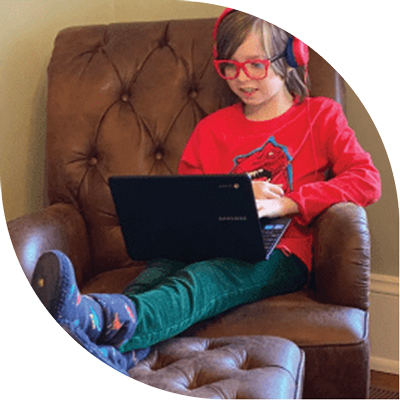 For Lowder, academic performance matters, but it is not the first signal she looks for. In one instance, when younger students were asked what they valued most about their experience, their responses were revealing.
“They felt like they were¦truly valued and accepted for who they are,” she recalls.
That answer stayed with her because it confirmed that the foundation was working. When students feel a genuine sense of belonging, everything else becomes possible.
This is also why the school has made a deliberate decision to remain small, with enrollment capped at around 100 students. Growth is not simply a matter of scale; it is also a matter of preservation. Expanding too quickly would risk weakening the very relationships that make the model effective.
At the same time, the school continues to grow in targeted ways. It is strengthening its reach among gifted and neurodiverse students while also expanding its presence within the pre-professional dance community, including its involvement with the Youth America Grand Prix.
For Lowder, the measure of success is found in small, specific moments: a student speaking up after weeks of silence, a parent saying their child no longer dreads school, or a teenager realizing they are capable of more than they once believed.
It is the same shift she once hoped for in her own children: a sense of comfort in who they are and confidence in what they can become. The goal was to create the kind of school Lowder wished had existed for her own children: a place where students no longer feel they must change who they are in order to succeed, and where, once that pressure is removed, they finally can.