


For over four decades, Nysmith School has been dedicated to providing a personalized learning experience that adapts to each child’s pace, interests, and abilities. Founded by Kenneth Nysmith’s mother, the school’s evolution under Kenneth’s leadership has made it a beacon for families seeking an education model that truly differentiates itself from mainstream schools.
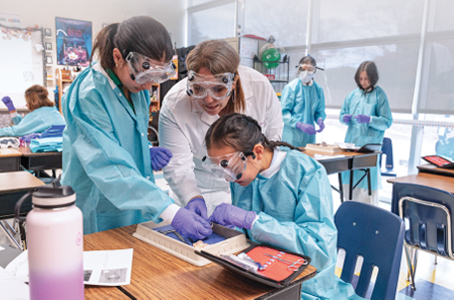 Today, the school serves over 650 students from preschool through eighth grade, and its curriculum is designed to meet the needs of each individual child. With an emphasis on small class sizes, with no more than 18 students per class, students receive the attention and support they need to succeed. With a commitment to both academic rigor and emotional growth, Nysmith continues to attract families who seek an environment where their child’s education is tailored and designed for success.
Personalized Education Powered by Subject-Specialist Teachers
How does Nysmith personalize education at scale?
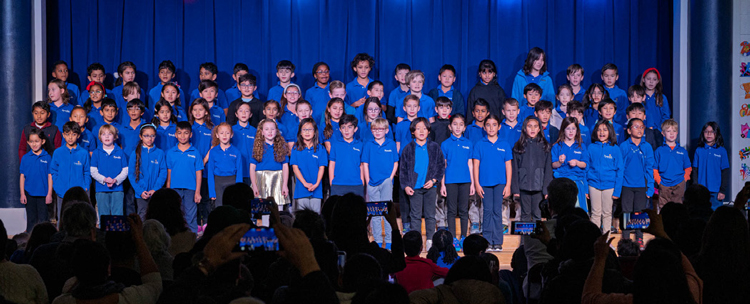
At the heart of Nysmith School’s approach is a core system of subject-specialist teaching combined with extensive differentiation across multiple grade levels. This method ensures that each child works at an optimal learning pace, supported by two teachers in every classroom. The flexibility of the curriculum is designed to cater to students’ individual strengths, allowing them to grow in subjects they excel in while also receiving the support needed in areas where they may face challenges.
Unlike traditional schools, where students are grouped strictly by age, Nysmith’s differentiation system allows children to work at their own pace. For example, in a kindergarten class, some students may be solving basic addition problems, while others may be tackling more advanced subtraction or even early multiplication. This flexibility in pacing allows children to be continually challenged while being supported in areas where they need help, ensuring that every student can progress without feeling either rushed or held back.
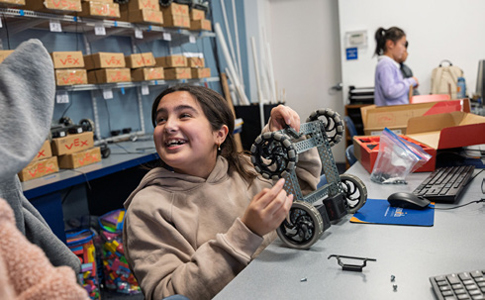 In a typical classroom, for example, kindergarten students may be tackling problems ranging from foundational concepts to more advanced material typically reserved for first- or second-grade students. This system allows students to learn at their level, not their age, and enables teachers to pace lessons according to each child’s readiness. Whether a student is excelling in math or reading, they can dive deeper into the subject matter while still receiving the necessary support to master key concepts.
“The key is finding the right level for each student and helping them grow from there,” says Kenneth. “We don’t rush our students through material. We want to make sure they truly understand each concept before moving on.”
This philosophy is embedded in every aspect of the school’s operation. Teachers take time to assess the needs and strengths of their students, constantly adapting their approach. It’s not about going through the motions of a lesson plan; it’s about meeting each student where they are and adjusting the learning experience to create the best environment for growth.
STEM Excellence as a Natural Outcome
Why is STEM excellence an outcome of Nysmith’s model?
Nysmith’s reputation for excellence in STEM is not based simply on offering advanced subjects but stems directly from the school’s personalized approach.
We don’t rush our students through material. We want to make sure they truly understand each concept before moving on.
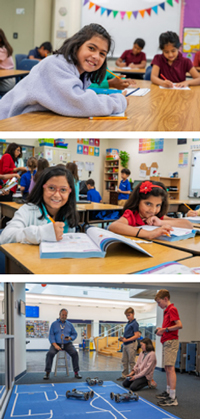 However, the school does not stop at science and technology. Students engage in a broad curriculum that includes language arts, history, and character education, ensuring a well-rounded education that fosters creativity, critical thinking, and emotional intelligence. The balance of academics with emotional and social learning ensures that Nysmith students leave the school ready to handle the complexities of high school and beyond.
Students are also introduced to advanced concepts such as high school-level mathematics and robotics by middle school. For example, eighth graders at Nysmith study calculus and pre-calculus, offering them an early start that prepares them for success beyond the school walls.
Nysmith’s ability to offer such high-level coursework in subjects like calculus and robotics speaks directly to the effectiveness of its differentiation system. These subjects are typically reserved for high school students, but through deep personalization and subject-specialist teaching, students are exposed to these advanced concepts much earlier.
“We hire teachers who are passionate about what they teach,” says Kenneth. “It’s not about managing a classroom; it’s about engaging students in a way that makes them excited about learning. This approach helps them understand and apply what they’re learning in meaningful ways.”
-
We believe being a good student goes beyond academic performance. It’s about developing the emotional intelligence to thrive in life, lead with compassion, and work well with others.
The school prioritizes hiring teachers who are not only skilled in classroom management but also bring enthusiasm and expertise to their subject matter. This passion is evident in the energy that radiates from the teachers, which has a direct impact on students. The classroom becomes a place of exploration and curiosity rather than mere instruction.
Creating Confident, Well-Rounded Students
How does Nysmith cultivate confident, well-rounded students?
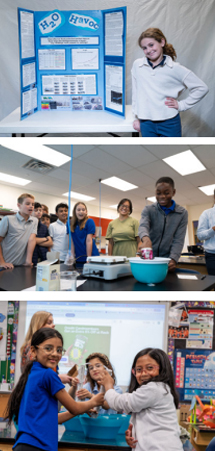 At Nysmith, the development of emotional intelligence is equally as important as academic achievement. In addition to core subjects, the school offers a dedicated Character Education and Communication class, where students learn vital life skills such as leadership, empathy, time management, and conflict resolution.
These classes focus on preparing students to navigate complex social situations, developing a skill set that will benefit them not just in school but throughout their lives.
The school also emphasizes physical well-being and artistic expression, with a strong arts program and physical education classes that help students develop in ways that extend beyond academics. Students participate in a variety of extracurricular activities that contribute to their overall development, including coding clubs, robotics competitions, and various arts programs.
The small class sizes and close-knit community further foster a supportive environment where students feel valued and heard. This, in turn, allows them to thrive socially and emotionally—qualities that are as important for success in life as academic achievement. The environment at Nysmith promotes collaboration, allowing students to support one another and grow as a cohesive group rather than as individuals left to fend for themselves.
“We believe being a good student goes beyond academic performance. It’s about developing the emotional intelligence to thrive in life, lead with compassion, and work well with others,” says Kenneth.
Predictable Outcomes as Proof of System Success
What evidence supports the effectiveness of Nysmith’s model?
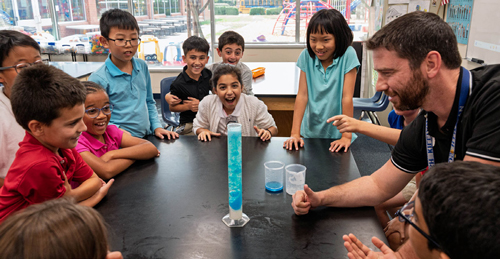
The success of Nysmith’s model is reflected in its students’ achievements. Alumni routinely attend prestigious high schools and universities, including Ivy League institutions, and often excel in national and international competitions, especially in STEM fields. The school’s unique approach creates a predictable outcome: students who excel academically while growing emotionally and socially.
However, the true measure of the school’s success lies not just in accolades but in the consistent outcomes produced by its method. For instance, student robotics teams consistently place in national competitions, and many Nysmith graduates go on to earn top rankings in global math and science challenges. These outcomes are not just impressive statistics; they are a direct result of the school’s personalized approach, reinforcing that the system works and prepares students for future success.
Beyond academic competition, Nysmith alumni go on to achieve success in diverse fields. One notable example is Hamid, a Nysmith School alumnus who became a valedictorian at George Mason University. He credits his success to the strong foundation he received at Nysmith, both academically and emotionally.
“It’s been incredible to watch Hamid’s growth,” says Kenneth. “He came to us with a passion for learning, and now he’s well on his way to achieving his dream of becoming a college president.”
A Growing Future without Losing What Matters Most
How will Nysmith grow without compromising its core model?
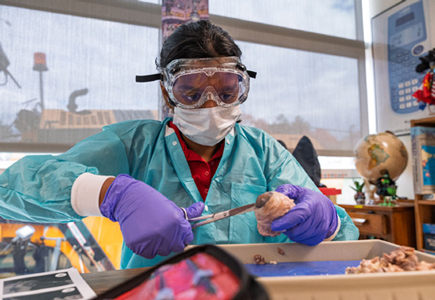
As Nysmith School plans to expand its student body to approximately 700 students in the coming years, it remains committed to its core values: personalization, small class sizes, and a community-driven approach. The school aims to refine its facilities and curriculum to remain at the forefront of educational innovation while staying true to its mission.
“We’re not trying to become a massive institution,” Kenneth says. “We want to continue offering the level of individualized attention that has made Nysmith special. Our focus will always be on ensuring that every student receives the support and challenge they need to thrive.”
While the school plans for growth, it is not growth for growth’s sake. Nysmith intends to maintain its small class sizes and focus on the level of care and attention each student receives, ensuring that the model responsible for its success remains intact.
Preparing Tomorrow’s Leaders Today
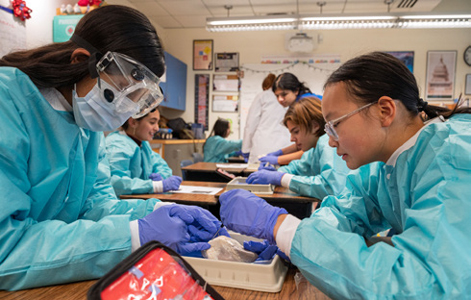
Nysmith School’s success is driven by its commitment to a personalized, differentiated educational model that combines subject-specialist teaching with an emphasis on emotional and social development. This system not only prepares students academically but also nurtures the essential skills that allow them to succeed in life and become leaders, thinkers, and innovators who make a difference in the world.
The school’s commitment to personalized education, emotional intelligence, and subject-specialist teaching has created a learning environment where students can thrive and develop into well-rounded individuals. Through its innovative approach, Nysmith School is setting the stage for students to reach their full potential and achieve great things both academically and beyond.