


What instructional model allows students to progress according to demonstrated academic readiness?
Described as a “hidden gem” in San Diego, Mt. Helix Academy has built its reputation on meeting students where they are and helping them grow with confidence. At Mt. Helix Academy, academic structure is built around a skill-based learning model that groups students by demonstrated ability rather than age. Serving TK through grade 8, the WASC-accredited, nonsectarian private school uses evidence-based instruction to ensure students progress at an appropriate pace, subject by subject.
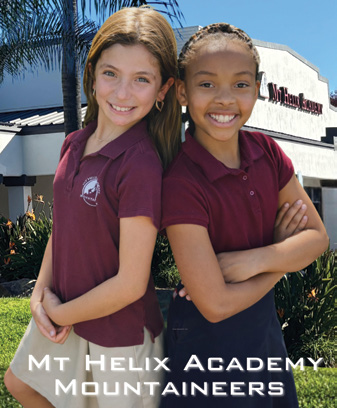 If a student is capable of succeeding in higher-level math, they are placed in advanced coursework aligned with their ability. If the same student requires additional support in reading, instruction is adjusted to provide the reinforcement they need. This approach allows learning gaps to close while continuing to cultivate each student’s strengths.
“This skill-based learning is what sets us apart,” says Mike Collins, Director. “When students are placed at the level that matches their readiness, they experience consistent mastery. That builds confidence, strengthens study habits and changes how they approach learning overall.”
Small Class Sizes, Measurable Progress
Skill-based grouping requires ongoing oversight. To support this, MHA intentionally maintains small academic classes, ranging from 8 to 15 students per class, depending on grade level.
How does Mt. Helix Academy monitor mastery and adjust support over time?
Teachers closely monitor progress and students are assessed regularly to confirm mastery, defined as 85 percent proficiency. Placement adjusts as needed to provide reinforcement or advancement. “Our goal is to meet each child's needs and keep them challenged without frustration,” says Alison Young, Assistant Director.
-
This skill-based learning is what sets us apart. When students are placed at the level that matches their readiness, they experience consistent mastery. That builds confidence, strengthens study habits and changes how they approach learning overall.
Small class sizes also strengthen relationships. Teachers can monitor students' social-emotional needs and students feel comfortable seeking help. Progress in all arenas stays visible and students know their overall performance and well-being are valued.
Inspiring Growth Beyond the Core Curriculum
While skill-based learning defines academics, MHA places equal emphasis on broader student development.
In what ways does the school extend development beyond core academics?
Weekly visual arts instruction spans all grade levels, building foundational skills while encouraging creative expression. The Spanish biliteracy pathway begins with early vocabulary and communication skills; by junior high, students enter coursework equivalent to Spanish I and II, positioning them for advanced study in high school. Physical education focuses on teamwork and healthy habits, while performing arts culminate in full-scale musical theatre productions, with music performances further developing preparation, confidence and poise.
Character building is reinforced through five daily pillars: being respectful, responsible, safe, kind and having fun. These behaviors are consistently practiced. Students build executive functioning skills in time management, organization and self-monitoring, alongside social-emotional competencies in relationship building and problem-solving. They learn to manage responsibilities with intention, work well with others and contribute to a positive school community.
Clear expectations paired with our “Catch ‘em Being Good” approach help students build self-discipline, confidence and emotional regulation. Students actively develop habits that build academic and personal success in a supportive, motivating environment.
“When our students move to high school, they are prepared to balance rigorous coursework with personal interests and extracurricular activities,” says Sarah Robertson, Assistant Director.
More Than a School—A Lasting Community
Why does community continuity play an important role in long-term student growth?
Behind each student’s progress is a faculty marked by experience and professional longevity, as many teachers have served the academy for decades. Ongoing training, coaching and collaboration are embedded in the culture—teachers observe one another, refine practices and collaborate across grade levels to ensure continuity, creating a truly supportive learning community.
The Parent Teacher Group (PTG) embodies this spirit of collaboration, contributing time, energy and creativity to enhance activities both inside and outside the classroom.
Alumni stay engaged long after graduation and many families return for the next generation. The school adapts to each student’s readiness, helping them leave with confidence, self-discipline, a sense of belonging and habits for success in high school and beyond.