

The Prentice School
Designing Education for Students who Learn Differently
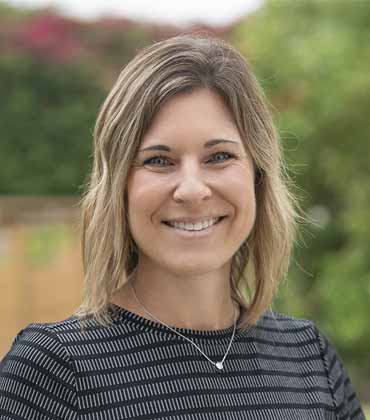
Devon Green
Education is most effective when it is built around how students learn. As Head of School at The Prentice School in Orange County, Green leads a learning community intentionally designed for students with dyslexia, ADHD and other language-based learning differences. Rather than adapting a traditional school structure for these learners, her responsibility is not only to teach but to rebuild confidence and create an environment where students can flourish.
Building a School Around the Learner
Leading a school that serves students with dyslexia, ADHD and related language-based learning differences is both a privilege and a responsibility. Throughout my career in education, I have been instinctively drawn toward non-traditional academic environments, where educators rethink how learning should work rather than trying to adjust students to a rigid system.
Many of our students arrive after years of academic frustration. By the time they reach us in fourth, fifth or sixth grade, they often associate school with difficulty rather than growth. Our role is to change that experience by creating a learning environment intentionally designed for how they process information.
This means smaller class sizes, structured literacy, multisensory instruction and targeted executive functioning support, all built into the daily academic experience rather than treated as separate interventions. Students rebuild confidence alongside their academic skills when they can access the curriculum in convenient ways.
Investing in Teachers as Instructional Experts
One of the most important leadership lessons I have learned is that the strength of a school is directly tied to the expertise of its teachers. Students with dyslexia and related challenges in working memory or processing speed need educators delivering instruction with precision and flexibility. Because teachers work with students daily, they adjust pacing, modify lessons and respond to each student’s needs.
That is why we invest heavily in professional development. Our school partnered with the Dyslexia Training Institute to certify every teacher in the OrtonGillingham approach to structured literacy. This was an intentional decision. Our students do not only need intervention in isolation; they need consistent instructional strategies across all subjects which improve their reading and writing skills over time.
When teachers are deeply trained and supported, the impact becomes visible not only in academic progress but also in how students recognize themselves as capable learners.
Building Program Infrastructure Around Student Needs
Supporting students with language-based learning differences requires a coordinated support system. Our program includes a speech and language pathologist, a marriage and family therapist and targeted executive functioning classes for our seventh and eighth-grade students. These supports work alongside structured literacy and multisensory instruction to address both academic and socialemotional development.
Academic progress cannot happen in isolation if a student is struggling with anxiety, organization or communication skills. By building these supports into the structure of the school, we create an environment where students are supported academically, cognitively and emotionally.
Strengthening Instruction through Research and Measurable Outcomes
At Prentice, evidence-based learning is not something we follow occasionally but actively informs how we design instruction, train teachers and build programs for our students. One initiative I am particularly proud of is our Mind Masters program, a research partnership focused on working memory and processing speed, two cognitive areas that often impact students with dyslexia and ADHD.
“We intentionally design our program around the needs of our learners rather than trying to make a traditional school model fit them.”
Through structured digital cognitive exercises and academic intervention, we study how strengthening these cognitive functions influences academic performance. Early research from this initiative has shown measurable growth in students’ working memory and processing speed, along with corresponding improvements in academic performance.
Leading with Mission Clarity and a Strong Team
Leading a school means balancing instructional leadership, operations and community engagement simultaneously. I have learned that the most effective way to manage those responsibilities is to remain grounded in the school’s mission and build a strong team. I do not believe leadership means having all the answers. In a specialized school environment, no single person can be an expert in everything. My role is to build a team of experts, trust their judgment and create a culture where we solve problems collectively.
When the mission is clear, decision-making becomes more focused and more consistent across the organization. Early in my tenure as Head of School, we realized that our admissions had expanded beyond the student population our program was designed to serve. Some students required different specialized environments. We made the difficult decision to transition those students to schools better suited to their needs and refocus Prentice on its core mission. It was challenging, but it reinforced a critical leadership lesson that a mission-driven school cannot be everything to everyone and remain effective.
Relationships as the Heartbeat of the School
Families often come to our school after difficult experiences in traditional academic settings. Building trust with those families is one of our most important responsibilities. That trust begins with honesty and transparency. We cannot promise a specific outcome within a fixed timeline, but we can guarantee that students will be taught in an environment intentionally designed for how they learn best. We use assessment and progress monitoring tools to ensure families can see that growth over time.
Strong stakeholder relationships with psychologists, specialists and other professionals who support our students also help strengthen those priorities and ensure that decisions remain aligned with the mission. These relationships build confidence in the program and in the school community.
The Future of Specialized Education
As I look toward the future of education, I hope specialized education becomes more widely understood and less stigmatized. Students with learning differences deserve access to educational environments that allow them to succeed, whether that is in specialized schools like Prentice or through stronger collaboration with public school systems. I believe we will continue to see greater partnership between specialized and traditional educational institutions so that more students can access the support they need.
Ultimately, leadership in education returns to a few core principles: stay grounded in your mission, invest deeply in your people, build strong leadership systems and prioritize relationships. When a school is built with intention and shared purpose, supported by research and led by a collaborative and mission-driven team, students begin to see themselves not as learners defined by challenges, but as individuals capable of achieving far more than they once believed possible.

Get the best of Education Insider delivered directly to you.
