


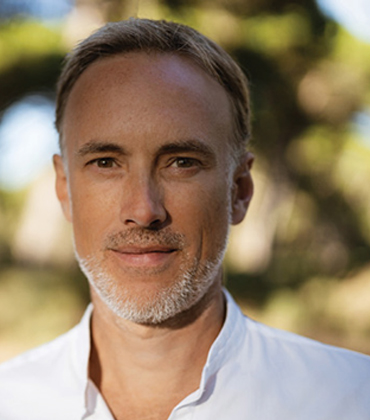
 Boris Walbaum, Co-Founder & CEO
Forward College is pioneering a post-AI education model that places human interaction at the heart of learning. As opposed to adding AI tools to traditional teaching, it has redesigned the learning cycle for the AI era. It combines AI-supported independent study with small-group collaboration and personalised teaching to make learning more engaging.
“It is about what is the right place for humans and AI in the learning cycle,” says Boris Walbaum, co-founder & CEO. “The appetite for learning is always the connection with other human beings, and we also train our students to use AI in the right way.”
Its undergraduate and postgraduate programmes ensure personalised attention, shared discovery and collaborative learning. In a university landscape where students can remain anonymous to teachers and loneliness is growing, Forward’s relational pedagogy fosters close faculty-student relationships.
Full-time teachers work with an average of 60 students a year, compared with 300 to 1,200 at other universities. Classes average 15 students, and each student has a weekly one-to-one tutorial. Shared living spaces and kitchens also help students build friendships and a strong sense of community.
Where AI Meets Human Interaction
The focus on human connection shapes Forward College's teaching methods. Its flipped-classroom model takes students through three stages: independent study with AI tutoring, small-group collaboration and teacher-led classroom discussions.
Students first learn individually through learning materials and an AI tutor to understand difficult concepts. They then meet in small groups to support and challenge one another through debates and simulated situations before joining a teacher-led seminar with around 14 students. Forward treats the classroom as a sanctuary for human interaction, where students deepen their learning and think on their feet. It is deliberately free of technology.
Students learn to distinguish active AI use, which supports learning, from passive use that offloads cognitive effort. They are encouraged to use AI as a learning aid but not as a substitute for human intellect. AI literacy is developed through workshops across the three-year programme and a week-long bootcamp. The bootcamp focuses on practical applications, including AI-assisted research, literature reviews and digital solution development using Claude, Claude Code and Claude Design. Students also explore database structures and functional mapping.
Taking Learning into the World
The international journey is another important dimension of Forward's educational model. Students study across Lisbon, Paris and Berlin, gaining exposure to different cultures. It is also introducing a Paris-based three-year track, with week-long visits to Lisbon and Berlin, for students with visa challenges. This exposure nurtures curiosity, social awareness and an adventurous mindset.
-
It is about what is the right place for humans and AI in the learning cycle. So the appetite for learning is always the connection with other human beings, and we also train our students to use AI in the right way.
Courses in issue analysis and systems thinking teach students to break down complex problems and examine them through data analysis. They apply these skills in real-world projects with professional partners.
Forward College's real-world projects build skills progressively over three years. First-year students focus on understanding and framing problems, analysing systems and learning the fundamentals of design. Second-year projects introduce technology and go-to-market strategies, and third-year students undertake consulting assignments with external partners.
In a project, a student group from politics, psychology and business explored how chatbots could help people with autism communicate more easily. They consulted experts and reviewed existing research, and developed a chatbot and tested it with a German research institute that continued developing the chatbot for scaling.
Another student team examined water consumption and found that golf courses accounted for 10 percent of drinking-water use in Lisbon region. By understanding their operations and users' needs, the team explored more effective ways to encourage water conservation.
Forward College earns recognition as a Top International Higher Education Institution in Europe 2026 for its approach to post-AI education that places human thinking, judgment and connection at the heart of preparing students for the future.