

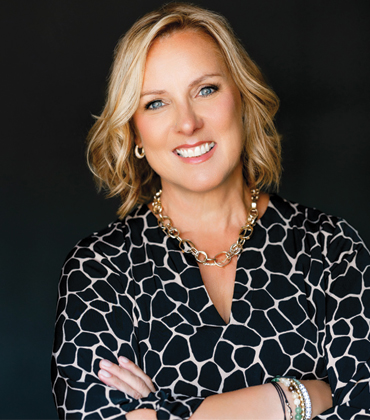
 Kerry Leo, CEO
Under Kerry Leo’s leadership, schools learn to define success on their own terms: What does genuine student engagement look like here? How quickly should we see shifts in instructional practice? By co creating clear, measurable goals and then gathering real time data—both numerical and narrative— Da Vinci guides educators through an iterative, evidence driven journey. Human connection stays front and center: teachers, leaders, and community members collaborate to interpret findings, refine strategies, and celebrate milestones. In this way, Da Vinci ensures that solutions aren’t just implemented—they’re understood, owned, and built to last.
“At Da Vinci, we believe schools have the answers within them—they just need the right tools and processes to uncover them,” says Leo. “Our role is to guide them through a structured inquiry that builds their capacity to drive continuous improvement.”
The Four Guiding Questions That Drive Impact
At the heart of Da Vinci’s model is a deceptively simple framework built around four essential questions:
1. What is the problem?
2. Why is it happening?
3. What will we do about it?
4. How will we know we’ve succeeded?
This framework—used by scientists, engineers, and systems leaders worldwide—is adapted by Da Vinci into a model for educational transformation. It starts with clarity. Schools often describe their problems in vague or reactive terms: “low reading scores,” “lack of student motivation,” or “disruptive classrooms.” But Da Vinci pushes for specificity. What data are we looking at? Who is most affected? When and where is the problem most visible? Are we mistaking correlation for causation?
In the diagnostic phase, Da Vinci teams help districts triangulate data—quantitative (e.g., benchmark assessments, graduation rates, absenteeism) and qualitative (e.g., interviews, classroom observations, student voice). The aim is to create a shared, evidence-based understanding of the problem, not just among district leaders but across all stakeholder groups.
 Only then does the team move to the second question: Why is it happening? This is where many schools fall short, often jumping to solutions based on assumptions. Da Vinci coaches teams to build hypotheses that are testable, grounded in local context, and aligned with research. For example, if a district notices a spike in behavior incidents among middle schoolers, it may hypothesize that inconsistent classroom management training or weak Tier 1 instruction is a contributing factor—rather than labeling students as “difficult.”
From here, Da Vinci works alongside schools to design targeted, realistic interventions—actions that address the identified root causes, not just surface-level symptoms. These might include professional development aligned to a district’s chosen instructional framework, restructured student support teams, or embedded coaching to reinforce evidence-based strategies.
-
With a unique framework grounded in scientific problem-solving, Da Vinci empowers its partners not only to address their current issues but to become independent, dynamic problem solvers for the future
Crucially, the process doesn’t end with implementation. The fourth question—How will we know we’ve succeeded?—is central to Da Vinci’s ethos. Success metrics are defined up front, tied to both leading and lagging indicators, and tracked over time through data cycles. This ensures districts are not just acting, but learning and adapting along the way.
“Too often, school improvement efforts drift because no one defines success at the beginning,” says Leo. “We help teams answer that question early—and keep coming back to it.”
Building Systems, Not Silos
Da Vinci’s impact lies not only in the logic of its approach but in how it’s delivered. Rather than parachuting in with prepackaged programs, Da Vinci builds capacity within existing systems. The goal is always sustainability. Staff development is embedded into daily workflows. Cross-departmental teams are formed to break down silos between special education, general education, and student services. And success is co-owned by teachers, leaders, and support staff alike.
“We don’t believe in dependency,” says Leo. “If we’re doing our job well, schools don’t need us forever. They become their own problem-solvers.”
To that end, Da Vinci provides intensive coaching and facilitation at the start of a partnership, gradually pulling back as schools gain confidence and competence. It’s a model of gradual release—much like the best instructional practices for students. As educators grow in their ability to use data, define problems, and evaluate outcomes, the role of the consultant evolves into that of a thought partner and strategic ally.
This shift is particularly important in underserved districts, where resource constraints and staff turnover often hinder long-term progress. Da Vinci’s approach ensures that knowledge is distributed—not concentrated in a single leader who may leave—and that systems outlast individuals.
From “Placemat” to Platform: The Launch of Navigate Pathways
In response to growing demand for tools that can digitally support this process, Da Vinci developed Navigate Pathways, a new software platform designed to bring their framework to life in a virtual space.
Launched in 2025, the platform serves as a living roadmap where schools can:
• Upload and analyze data from multiple sources
• Develop hypotheses tied to evidence
• Map interventions and assign responsibilities
• Track implementation milestones and impact metrics
• Collaborate across roles and buildings in real time
What began as a simple “placemat”—a graphic used during Da Vinci’s in-person workshops—has evolved into a powerful tool that allows schools to manage the entire improvement process in one shared space.
“This is about more than digitizing a process,” explains Leo. “Navigate Pathways is a tool for transparency, collaboration, and accountability. Everyone can see where we are, what’s working, and what needs adjustment.”
Already, schools are reporting benefits. Teachers and principals can access a shared dashboard showing what interventions are being used, what data is being collected, and how students are responding. District leaders can monitor progress across multiple sites. Coaches can log support activities and see how they align with strategic goals.
For students, the impact is more subtle but no less powerful. When schools align around shared goals and strategies, consistency improves. Students receive the same messages and supports across classrooms. Their progress is tracked, celebrated, and addressed more quickly. And families are more likely to feel informed and included.
Centering the Human Element
While Da Vinci’s model is deeply scientific, it is also unapologetically human-centered. The organization recognizes that change in education happens not just through data, but through trust, relationships, and shared purpose.
That’s why stakeholder engagement is embedded at every phase of the process. Whether through focus groups, surveys, or participatory design sessions, Da Vinci ensures that the people most affected by school decisions—students, parents, and teachers—have a voice in shaping the work.
 “When you listen to people’s lived experiences and combine that with data, you get solutions that are more nuanced and more likely to succeed,” says Leo. “And people are more likely to own the work when they helped build it.”
Da Vinci also prioritizes equity, ensuring that the problem-solving process surfaces disparities and addresses them explicitly. For example, when examining discipline data, the team might guide a district to disaggregate by race, disability status, or English learner designation—uncovering patterns that demand targeted action.
A Voice for Science in a Polarized World
As misinformation and anti-science sentiment grow in public discourse, Da Vinci is stepping into the role of advocate for evidence-based thinking. In 2024, the organization launched a podcast called A Head for Knowing, featuring conversations with researchers, educators, and changemakers across disciplines. With over 25 episodes, it has become a space where complex ideas—like cognitive load theory, the science of motivation, or culturally responsive pedagogy—are unpacked in ways that are both rigorous and accessible.
“The podcast is an extension of our mission,” says Leo. “It’s about bringing the best of what we know from science into the hands of the people doing the work—and doing it in a way that’s engaging, not intimidating.”
Episodes range from interviews with neuroscientists and behavioral economists to candid conversations with superintendents and classroom teachers. The goal is to make research not only understandable but actionable. As schools face increasing pressure to justify their strategies and spending, grounding decisions in evidence has never been more important.
Scaling Impact, Preserving Values
As Da Vinci grows—adding new clients, team members, and product offerings—it remains grounded in the principles that have guided it since its founding: curiosity, clarity, collaboration, and compassion.
The organization is exploring partnerships with state departments of education and regional service centers to bring its model to scale, particularly in districts that lack access to high-quality improvement support. Navigate Pathways is being refined with new features to support tiered interventions and align with federal reporting requirements. Internal capacity is expanding to ensure every district receives personalized, high-touch service—regardless of size or context.
But through it all, Da Vinci’s mission remains clear: to help schools think more clearly, act more strategically, and serve students more effectively.
In a sector often flooded with silver bullets and short-term fixes, Da Vinci Collaborative offers something rare: a method, not a menu. A guide, not a guru. And most importantly, a belief that schools can—and should—lead their own transformation with the right tools and mindset.
Because the future of education, like science itself, is built not on certainty, but on continuous inquiry—and the courage to ask better questions.