
Montour School District
Reimagining Public Education for a Changing World
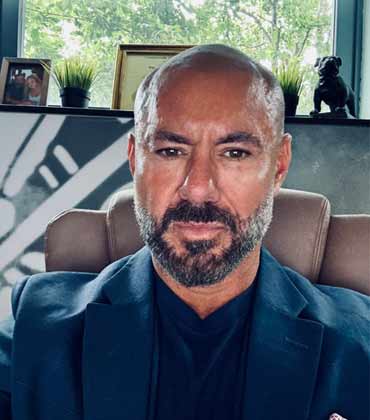
Dr. Christopher Stone
Dr. Christopher Stone is a veteran education leader with nearly three decades of experience driving innovation and student success. As Superintendent of Montour School District in Pennsylvania, Dr. Stone brings a future-focused mindset to public education, blending academic rigor with real-world relevance.
From piloting multiple artificial intelligence programs to launching micro-credentialing, his leadership is rooted in making learning meaningful, equitable and adaptable to the pace of change in today’s world. With a PhD in Leadership from Robert Morris University, he has held various leadership positions in public education, from teacher to principal, to curriculum director, and now as a Superintendent. His journey focuses on building pathways for every student to thrive in a dynamic world.
Leading with Purpose and Perspective
My journey in public education began 28 years ago as a third-grade teacher in the Cornell School District, just outside Pittsburgh. About three years into that role, the Superintendent encouraged me to pursue a master's in educational leadership because the principal of that particular building was retiring soon. As a 25-year-old, that was quite daunting for me, but I took the leap, earned my degree and principal certification, and by age 28, I became the principal of the same elementary school I had once attended as a child.
Leading a staff that included many of my former teachers taught me some of the most important lessons about leadership. From there, I moved into a middle school principal role in the Montour School District and advanced to Curriculum Director at the central office by age 32. Around that time, I also completed my PhD in leadership. Since then, I’ve remained in executive-level roles, culminating in my current position as Superintendent, which I’ve held for the past nine years.
Strengthening Teacher Preparation for Tomorrow
Today's most urgent challenge in public education is the growing shortage of qualified teachers. While Montour has been fortunate to maintain a strong talent pool, I’ve seen nationwide districts struggle, especially in high-demand areas like math, science, special education and ESL. This issue started before the pandemic but intensified post-COVID.
I have also noticed that many educators retire earlier than expected, creating a void because school districts across the country are having difficulty filling those positions. Meanwhile, fewer young professionals are entering the teaching profession. Some states have responded by fast-tracking alternative certification routes, which raises critical questions: Are these new teachers receiving the deep pedagogical training needed to be effective? Are they equipped to manage classrooms and deliver quality instruction?
I remain a strong proponent of traditional teacher preparation programs that require candidates to undergo rigorous coursework, classroom observations and a full year of student teaching. There’s simply no substitute for that kind of immersive training. If we want to rebuild the teaching workforce with competent professionals, we need to reinvest in the foundations of the profession.
We need to reshape the narrative around teaching. As leaders, we should identify exceptional high school students and promote teaching as a profession that requires critical thinking, problem-solving, and continuous learning, similar to other STEM fields. We must emphasize teaching's innovative aspects, such as creating engaging curricula and using technology to enhance learning. Most importantly, we must ensure competitive salaries to attract top talent and recognize teaching as a high-impact profession.
"We believe high school should be a launchpad, not a holding zone, where students gain real world experiences to navigate their futures confidently"
Strategic Innovation: Embracing AI and Micro-Credentials
At Montour, we are embracing innovation with purpose. We view AI as a tool to support and uplift educators rather than replace them. These platforms provide teachers valuable insights when assessing student work and offer personalized, timely feedback. We have piloted various AI tools across grade levels and subjects, particularly writing and math.
By automating some of the time-consuming aspects of grading and analysis, AI helps teachers focus on what matters most: engaging with students and refining instruction. But we don’t see AI as a magic bullet. It is a supplement, not a substitute, for effective teaching, and we are very clear about this in our approach.
We also invest in micro-credentialing to equip students with industry-relevant skills during high school. Whether they attend college or enter the workforce, we want all our students to be confident, capable, and competitive. We aim for graduates to earn certifications in areas like Microsoft Office, AI literacy, and specialized training in robotics or manufacturing.
The Future of High School
High school can’t look like it did 100 years ago. Today’s students live in a world of instant feedback and boundless access to information. To keep them engaged, especially in their junior and senior years, we need to break down the traditional walls of the classroom and give them real-world learning experiences.
We believe high school should be a launchpad, not a holding zone. When students can spend part of their school day exploring careers, developing skills, or working in real professional environments, they understand what drives them. And when they enter college or the workforce, they do so with greater purpose and direction.
Our internal data backs this up: students with these kinds of experiences in high school are less likely to change their major in college. That tells us they’re entering higher education with more clarity, and that’s precisely the kind of long-term impact we’re aiming for.
Lifelong Learning: The Superintendency in a Time of Change
My advice to new superintendents and education leaders is simple: never stop learning. Read broadly, listen to podcasts, attend conferences and connect with innovative thinkers. Education is evolving rapidly, and we must adapt. The changes we’ve seen in the tech industry are now happening in education. To lead effectively, we should be agile, informed and willing to take calculated risks, always prioritizing the needs of students and educators.
Lifelong learning is not merely a trend; it represents the only sustainable strategy for effective educational leadership today. The more we engage in personal and professional growth, the better we can serve our communities. Ultimately, this commitment to continuous improvement is the core purpose of our work.
Get the best of Education Insider delivered directly to you.
Copyright © 2026 Education Insider Magazine. All rights reserved | Sitemap | Editorial Policy | Feedback Policy | Subscribe | Newsletter | Conferences 
Registration on or use of this site constitutes acceptance of our Terms of Use and Privacy Policy | Disclaimer
