
St. Norbert College
Human-Centered Innovation in Higher Education
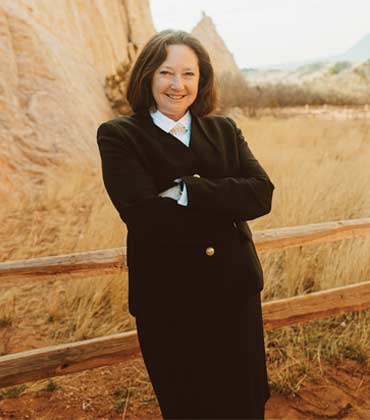
Valerie Martin Conley
Valerie Martin Conley is a former Vice President and Chief Academic Officer with extensive experience across public and private institutions of all sizes. She began her career at the National Center for Education Statistics, gaining early exposure to diverse institutions and the power of data-informed decision-making.
Conley served as a tenured professor at Ohio University, teaching executive-level PhD students and entry-level student affairs learners, emphasizing the importance of learning from the past, understanding the present, and preparing for the future.
Known for championing student success, workforce readiness, and apprenticeship programs, she has developed initiatives that blend academic rigor with real-world experience. Her leadership philosophy centers on competence, courage, and compassion, ensuring higher education remains human-centered, mission-driven, and adaptable in a constantly evolving academic landscape.
Balancing Rigor, Flexibility, and Humanity
One of the most significant challenges facing higher education today is balancing academic rigor with flexibility, student success, and workforce readiness. To me, this has never been an either/or proposition. Students need intellectual exploration and practical skills.
“I see AI as both a policy issue and a transformative tool. Institutions are now drafting clear guidelines for their responsible use, but at the end of the day, it must remain a tool that serves the mission.”
The obstacle no one talks about enough is time. Education must fit alongside life, work, family, and personal responsibilities. That’s why expanding access and financial aid isn’t enough; we must also create flexible pathways so learners can return to education throughout their lives.
I also believe deeply in protecting the role of the liberal arts. They teach curiosity, critical thinking, and lifelong learning, qualities our society needs just as much as workforce skills.
A Student’s Struggle That Changed Everything
One of the initiatives I am most proud of began when I was Dean of the College of Education at the University of Colorado, Colorado Springs. We required a yearlong student-teaching placement — a rare and rigorous model at the time.
I’ll never forget a student who came to my office, passionate about becoming a teacher but in tears because she couldn’t afford to quit her job for a whole year to complete the requirement. That moment stuck with me.
Working with colleagues, we secured donor funding to establish the Gallogly Family Foundation Internship Fund, which provided stipends to students during their placements. We also successfully advocated for state-level scholarships and helped launch one of Colorado’s first apprenticeship programs in early childhood education. Students could earn an emergency license, work in schools, and gain professional experience while completing their degrees.
That model of blending education with real-world experience is precisely what higher education should aspire to. I’m proud to see it still thriving and expanding today.
Using Data and Technology Wisely
I’ve always described myself as a mission-driven, data-informed decision maker. From developing early NCES data tools distributed on CD-ROMs, to training faculty and leaders on how to use those tools, to transitioning into learning management systems like Blackboard and Canvas, my goal has been consistent to leveraging technology to expand access and strengthen education.
While I was Provost at Idaho State University, I worked with the Faculty Senate to establish a standing committee on AI in the curriculum. This was early on, when most committees focused solely on academic offenses. We wanted to go further to ask: how do we thoughtfully integrate AI into teaching and learning?
I see AI as both a policy issue and a transformative tool. Institutions are now drafting clear guidelines for their responsible use, but at the end of the day, it must remain a tool that serves the mission and not the other way around.
Building Teams and a Culture of Collaboration
Building strong, collaborative teams has been my greatest joy throughout my leadership journey. I’ve always ensured that every direct report has a seat at the table and knows their ideas have value.
When people feel empowered to share ideas, take risks, and even make mistakes, the result is creativity, synergy, and better solutions. Transparency and openness are cornerstones of my leadership style. Higher education is about people first, which extends to how we build our teams.
Preparing for the Future
Looking forward, I believe the future of education requires breaking down the old silos of “college or career.” It must be both. Lifelong learning and skill development go hand in hand, because few people today will spend their whole lives in one career.
Higher education must work more closely with industry to foster adaptability, curiosity, and continuous growth. This gives me hope that our institutions can continue to prepare students not only for today’s jobs, but for the opportunities and disruptions of the future.
Competence, Courage, and Compassion
When I taught higher education administration and leadership for 13 years as a tenured professor at Ohio University, I always reminded my students of three essentials: competence, courage, and compassion.
• Competence ensures decisions are grounded in knowledge and evidence.
• Courage means acting even without complete certainty, because leadership rarely affords the luxury of waiting.
• Compassion reminds us that our decisions always impact people.
These three C’s have been my compass.
Right now, higher education is undergoing a disruption unlike any other. Financial pressures are forcing institutions to cut programs, and we had to make those hard decisions at St. Norbert College and even close campuses. The reality is that there is no mission without margin. Yet the academic mission must remain central, because higher education aims to advance knowledge and improve society.
After decades in higher education leadership, I recently decided to retire, at least for now. My husband and I are moving back home to be closer to family, including our twelve nieces and nephews. Our youngest just started college, and she’s a flyer on the cheer stunt team. We’re finally excited to have time to cheer her on from the stands.
Whether I return to academic leadership in the future remains to be seen. But what I know with certainty is this: higher education can transform lives. I hope future leaders will carry forward the values that have guided me: mission, humanity, and the thoughtful use of data and technology with competence, courage, and compassion.
Get the best of Education Insider delivered directly to you.
Copyright © 2026 Education Insider Magazine. All rights reserved | Sitemap | Editorial Policy | Feedback Policy | Subscribe | Newsletter | Conferences 
Registration on or use of this site constitutes acceptance of our Terms of Use and Privacy Policy | Disclaimer
