

Bryan Nixon
Helping a Community Find Its Heartbeat
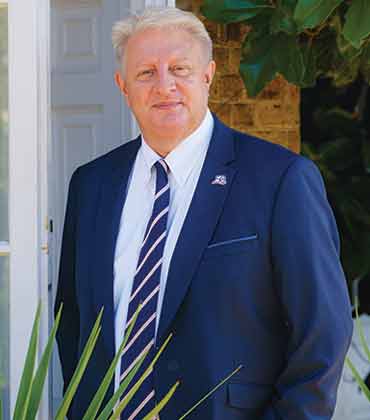
Bryan Nixon, Head of School at TASIS England, leads a mission-driven school focused on developing lifelong learning, international mindedness and service leadership. Having worked in Northern Ireland, the Bahamas, Germany, the United States and the United Kingdom, he brings nearly three decades of experience across international schools shaped by diverse educational systems and cultures.
A school's direction is shaped by its traditions, its programmes and above all the sense of purpose that brings people together. When Nixon joined TASIS England in 2017, the school was facing significant challenges that required a clear path towards long-term sustainability and growth. His role was to help transform the school into an institution capable of thriving both in the present and well into the future.
Throughout his career, Nixon has embraced a blend of transformational, instructional and service leadership. He believes empathy, compassion and listening are essential to successful educational leadership. One of his earliest observations at TASIS England was that members of the school community described the school's purpose in different ways. Before introducing new initiatives, he believed the community first needed to reconnect with a shared sense of purpose. Through approximately 250 contributions from students, parents, faculty, staff, alumni and board members, TASIS England developed a new mission that helped the community rediscover what Nixon describes as its heartbeat.
That mission established three commitments centred on pathways, engagement and connection, along with three desired outcomes of lifelong learning, international mindedness and service leadership. According to Nixon, these principles now guide the school’s Senior Leadership Team in everything from strategic planning to the school's day-to-day operations.
Nixon is clear that the school’s progress is a collective endeavour. Working closely with him, the Senior Leadership Team has helped translate the school’s mission into coherent priorities across teaching and learning, pastoral care, boarding and operations. Its members bring complementary expertise, challenge and support one another, and create the conditions in which middle leaders and staff can take purposeful action. This shared leadership has been central to embedding change, sustaining momentum and ensuring that improvement is owned across the school rather than driven by one individual.
With the mission firmly established, the school leadership turned its immediate attention to further strengthening learning and teaching. They expanded the middle leadership team to include curriculum, IB, AP and pastoral coordinators who support colleagues and drive continuous improvement, including the development and sequential review of a fully articulated curriculum across PreK-12.
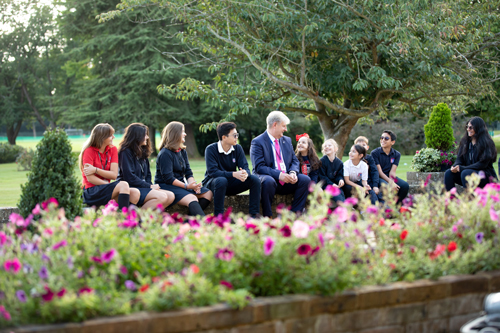 The school also invested in developing internal expertise in areas including Universal Design for Learning, pastoral practice and artificial intelligence. Through professional learning and collaboration, these specialists helped embed new approaches across classrooms and the wider school community. The school leadership deliberately scaffolded every aspect of learning and operations to ensure sustainable progress. Faculty and staff collaborated in creating a new Professional Learning Journey process, a teacher appraisal framework developed with staff involvement from the outset. Rather than relying on top-down implementation, major initiatives have been shaped through collaboration and shared ownership.
Students are encouraged to take on greater advocacy through leadership opportunities, clubs, societies, service initiatives and ambassador programmes. A confidential Student Voice platform enables students to share concerns, suggestions and commendations, strengthening safeguarding and wellbeing while ensuring student perspectives remain an integral part of school improvement.
Parents play an equally valuable role through volunteer service, buddy family programmes and support for school initiatives and events. Faculty, staff, students, parents, alumni and the board have all embraced the school's mission, commitments and outcomes, contributing collectively to what Nixon describes as the community finding its heartbeat once again.
“We have created pathways through which every single student can be successful.”
Recent accreditation visits by the Council of International Schools and the New England Association of Schools and Colleges recognised this transformation. Evaluators described TASIS England as a learning community that holds itself accountable to a meaningful educational mission where leaders, teachers and staff invest considerable thought and energy into their work while students remain engaged, empowered and reflective. The school's IB Diploma evaluation similarly reinforced its mission-driven approach. With a shared mission now embedded across the school, attention increasingly turned toward preparing students for a rapidly changing world.
Strengthening Learning for an Interconnected World
Nixon explains that every aspect of school life is guided by the commitments of pathways, engagement and connection. As education continues to evolve, TASIS England continually reviews how best to prepare students for future success. This has included initiatives centred on cultures of thinking, intercultural learning, support for English language learners and Universal Design for Learning.
With students representing more than 70 nationalities, diversity shapes far more than the demographic profile of the school. It influences teaching, relationships and the broader culture of understanding and respect. Nixon emphasises that international mindedness is intentionally embedded throughout both academic programmes and community life.
Technology also forms part of this evolving educational landscape. Nixon views artificial intelligence as a tool that supports and enhances learning, so the school leadership explored ways to help faculty and students make effective use of emerging technologies while ensuring the cognitive load remains with the learner.
Whether developing curriculum, strengthening intercultural learning, advancing Universal Design for Learning or implementing artificial intelligence, TASIS England follows the same continuous improvement cycle. Priorities are aligned with the school's mission and outcomes, supported through professional learning, implemented in classrooms and monitored through observations, assessments, examination results and pastoral surveys. This ongoing evaluation enables the school to refine its practices using evidence gathered from across the community. That same philosophy of creating meaningful pathways for every learner extends beyond classroom practice and is reflected in how the school structures each student's educational journey.
Creating Pathways without Limits
One of TASIS England's distinctive features is its personalised approach to secondary education. Rather than following a traditional block schedule, every student in Grades 9 through 12 receives a bespoke timetable designed around individual aspirations and interests.
Students can pursue one of four graduation pathways, including the IB Diploma Programme, Advanced Placement, a combination of IB Certificates and Advanced Placement courses or the US High School Diploma, which also includes specialized courses for English Language Learners. These flexible pathways enable every student to succeed and reflect the school's belief that there are no limits to learning. Extensive professional development for teachers and data-informed decision-making systems benefit both students and educators.
As a day and boarding school, TASIS England also transformed its boarding programme following Nixon's arrival in 2017. During the most recent CIS and NEASC evaluation cycle, TASIS England boarding was recognised as a flagship programme, while safeguarding and wellbeing were also identified as flagship areas of practice.
More recently, the Executive Director of the Boarding School Association visited the school to review how international students are supported from their transition to the United Kingdom through to their next steps beyond school. Nixon noted that the visitor remarked on how consistently the school's mission shaped every aspect of school life and described TASIS England as a beacon school.
Reflecting on his leadership journey, Nixon believes effective leadership begins with listening, engaging and investing in people. Leaders, he argues, are there to help communities find their own heartbeat rather than define it for them. Once that shared purpose has been established, the focus shifts to creating the systems, professional learning and processes that sustain growth and allow the community to continue evolving. For Nixon, lasting success comes when people are united by a clear mission, supported by strong systems and emboldened to flourish together.

Get the best of Education Insider delivered directly to you.
