


 Angela Huls, Principal
Chicago Math and Science Academy (CMSA) stands as a distinctive presence within the public charter school landscape, shaped by a philosophy that places the student at the center of every decision.
For more than two decades, the academy has served families across Chicago, building a reputation not simply through academic performance, but through a consistent commitment to developing the whole student. This approach reflects an understanding that education extends beyond content mastery, requiring equal attention to emotional wellbeing, personal growth, and real-world readiness.
At the core of the academy’s model is a structured yet adaptive system of support that integrates academic instruction with social-emotional development. Communication functions as the connective tissue of this system.
Teachers, counselors, and support staff operate within a framework that emphasizes continuous dialogue, both with students and among themselves. Regular grade-level meetings and departmental data reviews ensure that no student’s progress goes unnoticed. When challenges arise, interventions are not delayed or isolated; they are coordinated, deliberate, and responsive.
Principal Angela Huls says, “Our layered approach reflects the belief that student success is not the responsibility of a single educator, but the outcome of a collaborative institutional effort.”
Reinforcing the Student-Centric Philosophy
How does CMSA ensure student voice is incorporated into school culture and decision-making?
The academy’s commitment to student voice further reinforces this student-centric philosophy. Students are not treated as passive participants in their education, but as active contributors to the school’s culture and direction.
Organizations such as student councils and student voices create structured opportunities for expression, while informal mechanisms allow for anonymous feedback. This dual approach ensures that all students, regardless of personality or confidence level, have avenues to be heard. The result is an environment where students develop not only academic skills, but also a sense of agency and ownership over their educational journey.
Equally important is the academy’s comprehensive approach to mental health and emotional support. Recognizing the increasing pressures faced by students, CMSA has embedded wellbeing into its operational fabric. Counselors and support staff maintain a visible and accessible presence, offering guidance that extends beyond crisis management into proactive education.
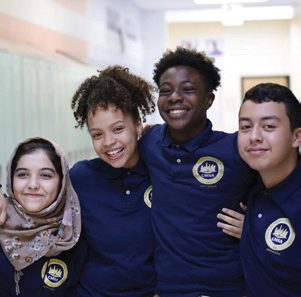 Classroom sessions addressing stress management, relationship dynamics, and mental health awareness equip students with tools that are both practical and enduring. The inclusion of designated mental health days further signals an institutional acknowledgment that emotional wellbeing is integral, not supplementary, to academic success.
This emphasis on holistic development does not come at the expense of academic rigor. On the contrary, CMSA’s academic framework is designed to challenge students while preparing them for the demands of higher education and the workforce. STEM education forms a central pillar, supported by programs that prioritize experiential learning.
Through initiatives such as Project Lead The Way and specialized health science pathways, students engage with complex concepts in applied contexts. Robotics programs, internships, and partnerships with industry organizations translate theoretical knowledge into tangible experience, bridging the gap between classroom learning and professional environments.
Fostering a Sense of Continuity between Home and School
Why is parental engagement important in maintaining continuity between home and school environments?
Exposure plays a critical role in this preparation. College visits, mentoring programs, and career exploration opportunities ensure that students are not only academically prepared, but also informed and confident in their postsecondary choices.
These experiences are designed to expand perspectives, encouraging students to consider a range of pathways, from traditional academic routes to skilled trades and technical careers. By embedding exploration into the educational process, CMSA enables students to make decisions that are both aspirational and grounded in real-world understanding.
-
Our layered approach reflects the belief that student success is not the responsibility of a single educator, but the outcome of a collaborative institutional effort.
Parental engagement serves as another cornerstone of the academy’s ecosystem. CMSA approaches families not as external stakeholders, but as essential partners in the educational process. Communication channels are intentionally varied, ranging from formal conferences to ongoing digital updates, ensuring that families remain informed and involved.
Events, cultural celebrations, and community gatherings strengthen this connection, transforming the school into a shared space where relationships extend beyond academic transactions. This collaborative dynamic fosters a sense of continuity between home and school, reinforcing the support system surrounding each student.
Technology functions as both an instructional tool and a bridge between stakeholders. A one-to-one device program ensures that every student has access to digital resources, enabling a learning environment that is both flexible and data-driven. Platforms for assignments, assessments, and communication provide real-time visibility into student progress, allowing educators and families to respond proactively rather than reactively.
The integration of interactive classroom technologies enhances engagement, particularly for diverse and multilingual learners, while backend systems enable administrators to identify trends and intervene early when necessary.
Supporting the Whole Child
In what way does CMSA balance STEM education with creative and interdisciplinary learning opportunities?
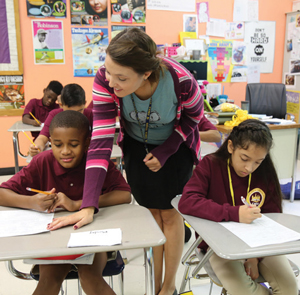 Despite its strong emphasis on STEM, CMSA maintains a deliberate balance between analytical rigor and creative expression. Students are encouraged to explore interests across disciplines, participating in programs that range from visual arts and music to debate and language competitions. This balance reflects an understanding that innovation often emerges at the intersection of disciplines, and that creativity is not separate from scientific thinking, but complementary to it.
By offering diverse opportunities, the academy ensures that students develop as well-rounded individuals, capable of both critical analysis and creative problem-solving.
Ms. Huls articulates this philosophy with clarity, noting, “We believe that strong communication is the foundation for supporting the whole child.” Her perspective underscores the intentional design behind CMSA’s systems, where every structure, from academic planning to emotional support, is interconnected. This coherence is not accidental, but the result of sustained effort to align practices with the school’s broader mission.
Combining Academic Excellence with Emotional Wellbeing
Looking ahead, CMSA’s trajectory is defined by adaptability and forward-thinking strategy. The academy continues to refine its programs in response to evolving educational standards and workforce demands, with a particular focus on expanding career and technical education pathways. Investments in technology and partnerships are guided by a long-term vision that prioritizes relevance and resilience. Rather than reacting to change, CMSA positions itself to anticipate and navigate it, ensuring that students remain prepared for a future that is both dynamic and uncertain.
At the same time, the school remains grounded in its identity as a community institution. Its longevity has fostered generational connections, with families returning and recommending the academy based on lived experience rather than abstract reputation. This continuity reinforces trust, creating a stable foundation upon which innovation can occur. Yet, like many charter institutions, CMSA operates within the constraints of funding structures that do not always align with its ambitions. Addressing these disparities remains an ongoing challenge, one that directly impacts the scope of opportunities available to students.
Ms. Huls reflects this balance of pride and pragmatism, stating, “Our goal is to support the whole child by providing pathways that lead to both college success and career opportunities.” Her statement encapsulates the academy’s dual focus on aspiration and practicality, emphasizing outcomes that are both meaningful and measurable.
In an educational landscape often defined by competing priorities, CMSA offers a model that integrates them. Its approach does not separate academic excellence from emotional wellbeing, nor does it treat preparation for the future as distinct from present experience. Instead, it constructs an environment where these elements coexist, reinforcing one another in ways that are both intentional and effective. The result is a school that not only educates, but equips, preparing students to navigate complexity with confidence and purpose.