


At Camp Med-O-Lark’s summer camp, the waterfront runs along the main property, visible from nearly every corner. Campers move between a ceramics studio, an open-air circus rig, a music production space and a culinary area. One camper is working with clay while another is learning trapeze as each day unfolds differently for them. At the entrance, a banner reads: “Welcome home.” First-time campers may read it as just another slogan, but over time, those words begin to ring true.
Founded in 1965 by Jay Stager, Camp Med-O-Lark was built as a deliberate departure from the dominant camp model of the time—militaristic, competitive and gender-segregated. It became one of the first truly co-ed programs in the country, centered on the arts and self-expression.
“Camp is a place with the freedom to be and to become,” says Jody Moser, director of programming and culture, who first arrived as a counselor in 1999. That ideology still guides how the camp runs. It is reflected in a culture of kindness that shapes how people interact, without judgment and with room to grow.
A Day at Camp
How does Camp Med-O-Lark structure daily learning and creative activity for campers?
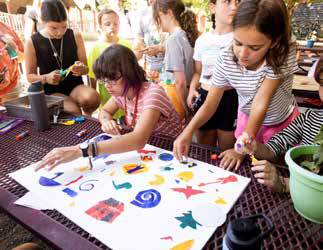 The camp runs on a six-period structure, with three primary classes taken over roughly nine days and three rotating electives that shift midway through the two-week session. The curriculum spans visual arts in ceramics, hot glass, woodworking, fashion and painting, alongside performance disciplines in theater, cabaret and dance. A circus program, led each summer by visiting instructors from Brazil, covers flying trapeze, silks and aerials. Music instruction covers everything from individual instruments to band formation and a production studio.
Campers choose their own classes. That autonomy is the camp’s first lesson.
“We think it’s important that the kids get to choose how their day looks,” explains Moser. “That’s a big part of the independence and growth that happens.”
Why does individualized instructor engagement matter within arts-focused summer camp learning environments?
In one instance, a boy arrived late to a ceramics session and was asked to work with clay. He had never sculpted before. Within days, he produced a highly stylized bust with exaggerated, sharply observed features. The work was driven more by instinct than formal training. His instructor, who held a Master of Fine Arts, recognized the raw ability immediately and contacted his family. In her view, his skill was at a level she associated with her graduate peers. The camp then helped his family find ways for him to continue exploring ceramics after the summer.
-
We think it’s important that the kids get to choose how their day looks. That’s a big part of the independence and growth that happens.
Moments like that aren’t unusual at Camp Med-O-Lark. Classes are open, groups are small and instructors stay close to the work. They are hired for that kind of engagement and care. Technical skill is expected, but it isn’t what determines fit. The camp seeks people who want to work closely with kids and are motivated by that work.
Connection Before Camp Begins
In what way does Camp Med-O-Lark maintain connection with families throughout each session?
Before the start of the session, conversations cover each camper’s strengths, challenges and comfort levels, and that information is shared with counselors and instructors. Communication remains open during the session, and photos on the camp’s website give families a view of daily life, particularly for those sending a camper away for the first time.
What families consistently notice over the course of the session is the independence campers develop through making choices and learning from that experience. They also leave with friendships built through shared experiences, often staying in touch long after the session ends.
Camp Med-O-Lark is like a second home, something people come back to and recognize as their own.