

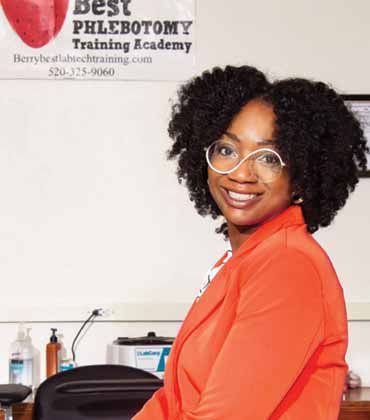
 Kelly Ellsberry, Education Coordinator and Executive Lab Director
Berry Best Phlebotomy Training, a licensed trade school specializing in phlebotomy and laboratory assistant education, helps students overcome these barriers through an accelerated, hands-on learning experience that develops both technical proficiency and professional confidence. Its phlebotomy certification program equips students with the practical skills and industry-recognized credentials sought by laboratory managers in as little as three weeks.
Many students enter training uncertain about their abilities and leave with the confidence, practical experience and professional readiness needed to pursue laboratory careers. Its curriculum has consistently produced National Healthcareer Association certification pass rates approximately 17 to 23 percent above national averages. The track record reflects the program's longstanding belief that practical application and clinical exposure are essential to building confidence and producing workforce-ready graduates.
“Practical application has always been at the heart of our training. Our strong certification outcomes are the result of the hands-on clinical experience and support that students receive,” says Kelly Ellsberry, Education Coordinator and Executive Lab Director.
Developing Confidence through Practical Learning
Berry Best's new hybrid training model removes the barriers that prevent prospective students from pursuing healthcare training. The revised format combines two weeks of online coursework, designed in partnership with Force for Health, with two intensive eight-hour clinical training days.
Students complete foundational learning at their own pace before appearing for an online final examination. Clinical rotation assignments provide exposure to patient care environments, preserving the patient-facing preparation that accelerated hybrid programs rarely provide and helping students build confidence before completing an in-person clinical assessment.
Ellsberry's background in behavioral health and neuroscience shapes her approach to instruction. She helps students build the resilience and professional mindset required to succeed in clinical environments. Younger students often arrive hesitant to ask questions or fearful of making mistakes. She encourages them to view mistakes as part of the learning process rather than evidence of failure, helping them become more comfortable with uncertainty, correction and growth.
Older students face a different challenge. Many enter the classroom carrying doubts about their ability to succeed in a new field. One student, aged 71, questioned whether she was too old to pursue phlebotomy training. Thanks to Ellsberry’s guidance and consistent support, she overcame her self-doubts and completed the program with a perfect score on her clinical final and a 98 percent score on her written examination.
-
Practical application has always been at the heart of our training. Our strong certification outcomes are the result of the hands-on clinical experience and support that students receive.
Students experiencing anxiety, difficult personal circumstances, or other life challenges receive ongoing guidance throughout their training. The program also offers leave-of-absence options, allowing students facing personal challenges to pause and resume their studies.
Connecting Training to Career Opportunities
As an independent clinical laboratory owner with nearly two decades of experience coordinating and operating laboratories, Ellsberry reviews resumes, hires directly from program graduates and prepares students according to the expectations she sees firsthand as an employer. She also advises students on the workplace behaviors employers value, including attention to detail, accountability and effective communication.
Beyond preparing students for available roles, Ellsberry is working to broaden awareness of laboratory careers among male students. She believes many young men continue to view healthcare careers primarily through a caregiving lens, overlooking the scientific and technical nature of laboratory medicine. For Ellsberry, expanding awareness among young men is part of a broader mission to build a larger and more diverse pipeline of laboratory professionals.
Berry Best has also begun integrating AI into its operations through a newly launched website. The website’s AI-powered features streamline registration and provide immediate responses to common inquiries, improving access to information and reducing wait times.
While the methods of instruction delivery continue to evolve, Berry Best's mission remains unchanged; preparing students for rewarding careers in laboratory medicine.