


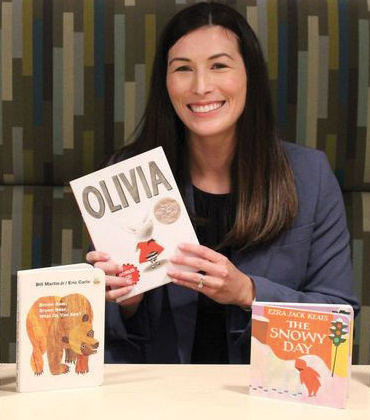
 Erin Bailey, Vice President, Literacy Programs & Research
Stories endure because children continue to find meaning in them. That belief guides August House Publishers, now entrusted to Reading Is Fundamental (RIF). For August House, this transition strengthens its ability to do what it has always done best: steward global folktales and oral storytelling traditions while expanding access to children across the U.S. through RIF’s national literacy programs.
RIF, a leading children’s literacy nonprofit in the U.S., began in 1966 with the goal of ensuring children could own books and start their own home libraries. Its core program, Books for Ownership, grew out of the original bookmobile model that brought books directly into communities where libraries and bookstores were scarce. The emphasis has always been on choice and ownership. When August House became part of RIF, the acquisition created a natural symbiosis, establishing a publishing arm that could supply even more high-quality, culturally rich titles to the very children RIF serves.
“We purchase and distribute books directly to children, and now, with the opportunity to print books, we can give children even greater access and choice,” says Erin Bailey, Vice President, Literacy Programs & Research.
Preserving Culture, Igniting Literacy
How does August House adapt oral traditions into illustrated books while maintaining cultural authenticity?
August House has long specialized in adapting oral traditions and folktales into illustrated books for young readers. These stories were passed down orally and naturally changed as storytellers tweaked them to fit their voices and audiences. When adapting these stories into books, the goal is to retain the cultural origins and meaning of each tale while presenting it in a format accessible to young readers.
Each book is developed by a full creative team that includes the author or storyteller, the illustrator, the creative director, and the editor. They work together to ensure cultural authenticity in every decision. Fauna, animals, clothing, backgrounds, and symbolism are carefully researched to ensure accurate representation of the story’s cultural origins.
-
We purchase, print, and distribute books directly to children, giving them both access and choice.
For instance, in The Clever Monkey, a West African tale, jungle cats are shown with longer, rabbit-like ears—true to that region—rather than the shorter ears of a domestic cat. The illustrator made this intentional choice after researching regional characteristics to authentically express the cat’s reaction when the cheese is eaten. Details like this bring the story to life while honoring its roots.
Thoughtful Selection and Literacy Development
Why is collaborative selection important for ensuring cultural relevance and storytelling strength in titles?
Selection is collaborative and deliberate. Each title begins with a thoughtful review process led by a creative team that assesses cultural authenticity, storytelling strength, and contemporary relevance. The team determines which folktales will resonate with children today while remaining faithful to their origins. Insights from storytellers who perform before live audiences help ensure that the energy of oral tradition translates effectively into print.
Beyond preservation, these stories support early literacy development. Many folktales follow a repetitive structure and a clear moral arc. Stories such as Stone Soup use predictable patterns that help children anticipate events, recognize narrative flow, and build comprehension. This structure allows young readers to internalize story cadence, understand character and conflict, and confidently retell tales in their own words.
For Reading Is Fundamental, this storytelling model aligns directly with the goal of encouraging children to read and build home libraries. The impact of this model is clearest at RIF’s Books for Ownership events, usually held at schools. Children browse book tables and sometimes discover a title that matches a story their grandparent once told. They light up when they find Stone Soup, The Cleverest Thief or another familiar tale, and then take it home as a book they can keep as part of their personal library.
In what way does the partnership with RIF expand access and distribution of children's stories?
Moving forward, August House and RIF are focused on expanding distribution and continuing to ensure all children have access to a wide variety of stories. By combining publishing expertise with RIF’s established nonprofit infrastructure and national network, the organizations are dramatically increasing both access and choice for children across the country.
Through this strategic alignment, August House Publishers is doing more than preserving folklore. It is ensuring that timeless stories continue to inspire, educate, and connect generations of readers—exactly as they were meant to be shared.