

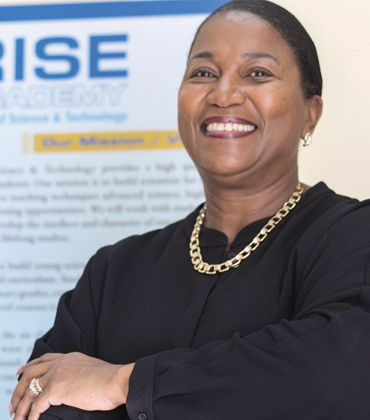
 Dr. Carmella Morton, Founder and Executive Director
Founded in 2007, RISE Academy School of Science & Technology operates as a K–8 school built around early exposure to science, technology, and applied learning, reflecting the belief that academic identity forms long before high school. With STEM certification and Cognia accreditation the school has built a cohesive learning experience that blends academics, creativity, and equity.
Small in size yet ambitious in scope, it serves roughly 345 students and delivers outcomes that far exceed expectations. From the first years of school, students step into environments that treat curiosity as a responsibility and are immersed in learning that feels purposeful and alive. Early immersion shapes confidence, builds academic identity, and sets expectations that students carry forward as they progress through their education.
How do hands-on investigations build confidence and readiness for advanced scientific study?
Each program at RISE Academy reinforces the same developmental arc, where confidence supports risk-taking and readiness emerges through consistent practice. Hands-on experimentation beings with students conducting real investigations and gradually progressing to advanced laboratory experiences by middle school. Through applied learning, students build confidence alongside content knowledge, developing the habits of inquiry that form the foundation for advanced study.
“Our goal is to make sure students embrace science and technology at an early age and feel prepared to accept the challenge,” says Dr. Carmella Morton, founder and executive director.
That preparation shows up later as students enter high school with earned credits, readiness for advanced coursework, and familiarity with academic rigor that no longer feels overwhelming. Rather than steering students toward predetermined careers, it prepares them to think critically, and confidently choose their own academic and professional paths.
How does STEAM integration expand learning beyond traditional science and technology instruction?
Beyond the classroom, students participate in clubs and organizations including National Honor Society, math, chess, STEM exploration, and drone piloting. The drone program, which integrates mathematics, physics, and history, culminates in student competitions that require technical skill and strategic thinking. Science competitions at the local, national, and international levels are woven into the academic culture, with students presenting original projects and earning recognition as early as the primary grades.
-
Our goal is to make sure students embrace science and technology at an early age and feel prepared to accept the challenge.
What truly distinguishes RISE Academy is its commitment to STEAM education, where creativity and communication are treated as essential partners to scientific thinking. The school’s performing arts program is a cornerstone of this philosophy, with students participating in licensed Disney Junior stage productions. Visual arts and music instruction further enrich the curriculum, reinforcing the idea that innovation thrives at the intersection of analytical and creative disciplines. Students learn how to communicate ideas effectively and work collaboratively, skills that are essential in any future field.
How do equity initiatives and global partnerships strengthen the RISE Academy learning environment?
Equity is embedded into the design of the school. As a Title I institution, the school directs resources to ensure every student receives the support or challenge they need. Students benefit from free tutoring and reduced class ratios, while advanced learners are encouraged to earn high school credits before leaving middle school.
Global awareness is another defining feature of the RISE Academy experience. Through partnerships with organizations like United Nations, students engage with real-world issues and interact with experts from around the globe. Collaborations with institutions like the Phillip and Patricia Frost Museum of Science further expand learning beyond campus, exposing students and teachers to professional development and competitive academic opportunities. Language instruction, including Japanese beginning in kindergarten, reinforces cultural awareness and global perspective.
Guiding this work is strong, consistent leadership. Principal Dr. Adriana Guerra brings more than a decade of experience to the school, using data-driven instruction to ensure the mission translates into daily practice. Under her leadership, the school has fostered a culture where students are recognized for achievement, and growth.
RISE Academy’s impact extends beyond test scores or rankings. Alumni return to volunteer, mentor younger students, and remain connected to the community, many continuing into advanced science and technology pathways that reflect the foundation built during their early years at the school.
Each day, that responsibility continues through consistent practice, close attention to students, and a commitment to meeting learners where they are while preparing them for what comes next.