


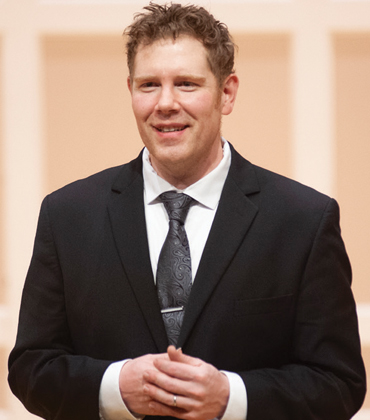
 Eric Nehring, Founder, Owner and Principal
For the Minnesota School of Music, every student’s lesson is supported by the parent behind it. Strong communication with them is the foundation of student progress. When relationships are steady, learning has room to grow.
“Our entire model is designed around the customer,” says Eric Nehring, founder, owner and principal. “The quality of that experience is what differentiates us.”
That commitment shapes daily practice. Front-desk staff receive structured training to ensure clear communication and dependable scheduling. Instructors complete onboarding that covers procedures, expectations and service standards alongside musicianship. Families encounter clarity. Students enter classrooms where goals are defined and progress is measurable.
Relationships extend beyond courtesy. Nehring emphasizes that engagement starts by building trust with parents. When motivation dips—as it sometimes does in music study—a strong parent connection allows the school to support the student consistently. Stability in communication protects long-term growth.
Structured Curriculum with Age-Specific Focus
How does Minnesota School of Music structure curriculum for K–12 development?
Most community music schools follow established curricula such as Piano Adventures, Suzuki or FJH Young Beginner Guitar Method. Minnesota School of Music begins with those frameworks and reinforces them through instructor training.
The school serves only K–12 students. Teachers specialize in working with children rather than dividing time between adults, college students and young beginners. Focus sharpens expertise. Curriculum is applied at developmentally appropriate levels, ensuring lessons remain both disciplined and accessible.
Sessions balance structure with creativity. Students complete core technical work and then enter “musical free time,” a self-directed segment that allows exploration beyond the page.
“We get the meat and potatoes in there, and we still make room for dessert,” says Nehring.
An Employment Model that Builds Accountability
Why does the school employ instructors as W-2 employees instead of contractors?
A common pattern in the private music instruction sector is the reliance on 1099 contractors who operate independently. Minnesota School of Music, however, employs all instructors as W-2 employees. Alignment with shared values begins during recruitment.
-
Our entire model is designed around the customer. The quality of that experience is what differentiates us.
Training includes whiteboard instruction, observational learning and mentorship. New teachers observe experienced instructors before leading lessons and later receive structured feedback. Faculty operate as a coordinated team rather than isolated practitioners.
Administrative discipline grew from experience. In the early years, Nehring handled long nights of scheduling, billing and operational details himself. Expansion required systems. Over time, scheduling platforms, payment processing tools and workflow refinements were implemented. The work may appear routine, yet it protects the customer experience.
Growth, in Nehring’s view, depends on strong people supported by durable systems.
Technology that Serves
Digital tools are adopted when they solve real problems. LessonMate addresses missed lessons by allowing teachers to record short instructional videos covering technique and repertoire. Content is delivered directly to parents without additional logins or scheduling complications.
Despite new platforms, simplicity remains visible in every classroom. A metronome sits beside staff paper in each teaching room. Advanced tools increase efficiency. A simple metronome still teaches discipline. That contrast defines the school’s approach: technology enhances; fundamentals endure.
Motivation through Measurable Progress
How does the Musical Ladder System motivate students through measurable progress?
Engagement begins with connection and continues through visible achievement. The school’s Musical Ladder System provides structured assessments every three or six months. Students earn wristbands and trophies through in-house evaluations, eliminating additional fees or external testing logistics.
Professional recitals in established venues translate preparation into confident performance. Community appearances, including assisted living performances and summer concerts, extend learning beyond the classroom. Each initiative reinforces relationship, structure and measurable growth.
Disciplined Expansion
Future plans include expansion into additional North Metro communities over the next three to five years. New locations will open only when management capacity and operational systems are prepared to support them. Growth follows readiness.
Education Insider recognized the Minnesota School of Music as the Top Music School in Minnesota—2026. The recognition reflects a school built on people, systems and strong relationships.