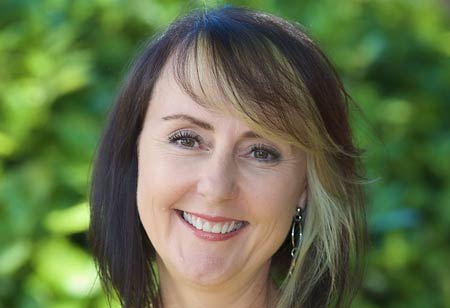


 Emma Wood, Headmistress
As children walk through the Bronte School gate each morning, they are greeted by Headmistress Emma Wood and Deputy Head Toby Laubach. By the time they reach their classrooms, the students are settled in and ready to learn, because someone they trust was happy to see them.
Bronte is an independent, co-educational preparatory school in Gravesend, Kent, serving children aged three to 11. It has been part of this community since 1905. There is one class per grade level, with no more than 20 students. Each classroom is supervised by two adults. The school is small by design, built to feel less like an institution and more like a second home.
Family culture and academic ambition are twin pillars at Bronte and they depend on each other. A child who feels known and valued will learn. A child who is anxious or invisible will not. Bronte builds everything on that conviction.
“We certainly feel like we are going above and beyond in terms of care and wellbeing, because that is valued just as highly as the academic success of the children,” says Mrs Wood.
What Family School Looks Like in Practice
How does Bronte implement well-being monitoring to support both emotional and academic development?
Staff celebrate birthdays in the school office with candles. They host class sleepovers in the school hall, cook s’mores in the garden and play hide-and-seek. The quiet child on a difficult morning is noticed because adults take responsibility for noticing.
Bronte understands that children do not always voice their worries. A Listening Ear team is available whenever children want to talk. Play therapy and talk-and-draw sessions support those who communicate better through action than words. Every child completes a well-being questionnaire. Staff round-robins gather observations from every adult in the building, whether they work in classrooms, the dinner hall or the playground. Each term opens with pupil progress meetings. The first item on the agenda is the Leuven Scale of Well-Being and Engagement, a framework developed at the University of Leuven that measures how children feel and how deeply they participate. Academic data follows. Emotional engagement and academic performance are treated as inseparable.
We certainly feel like we’re going above and beyond in terms of care and wellbeing, because that is valued just as highly as the academic success of the children.
“We would rather walk 10 feet to somebody’s office than send an email,” says Mrs Wood.
 Mr Laubach, who has worked in several schools, describes Mrs Wood as ‘a very present head,’ never shut away in an office. That visibility sets the tone. Staff stay late because they want to. Families who join tend to stay through the generations. Mrs Wood has known some of her current Year Six families for over a decade. She was part of their world before those children were born. She knows their grandparents, aunts and older siblings who left years ago and still find their way back, because Bronte is still their place.
A Curriculum Built Around Each Child
Why does a personalized curriculum help develop independent thinking and sustained student engagement?
Bronte designs its curriculum in-house. It is skills-based and planned around the strengths and interests of individual children. Being small makes this possible. Staff know every pupil well enough to shape learning around particular aptitudes and to give each child room to pursue what genuinely interests them.
Lessons open with a hook, a practical activity or a real-world problem that gives children a reason to engage before any formal instruction begins. Teaching adapts through discussion, problem-solving, art, drama and sport. The aim is to help children think.
“Rather than just going straight up, we encourage children to explore and go sideways,” says Mr Laubach.
In the early years, immersive learning draws on two distinct but complementary traditions. Montessori education provides a structured environment with defined materials, where children learn at their own pace through self-directed activity. Reggio Emilia takes a more emergent, project-based approach. It treats the environment itself as a teaching resource and follows children’s interests as they develop. Bronte draws on both. In practice, staff create immersive scenarios that children enter on their own terms. A recent project based on Supertato had adults dressing up as vegetables while children planned rescue missions and wrote notes to the book’s characters. Children moved from the story into writing and problem-solving without any energy shift, because the experience itself was the learning.
-
We aim to find intrinsic motivation and joy in the act of hard work, helping children understand that there is genuine satisfaction in doing your best for its own sake. Bronte ensures pupils leave us not only ready for their next school, but ready for life.
Pupils become more independent and take on greater responsibility as they progress through the school. In Year Six, philosophy lessons ask children to explore contested questions, justify their views and learn to sit with disagreement. Holding a position with both confidence and openness is one of the most valuable qualities a young person can carry into secondary school.
Bronte prepares children for a digital future without abandoning what has always mattered. Coding begins in Year One with introductory programming, continues through Scratch in the middle years and culminates in Python in Years Five and Six. A typing programme starts in Year One. Children learn through the Google Education platform and receive explicit instruction on digital footprint and online safety. Handwriting, extended writing and the stamina to concentrate remain central. Technology supports learning. It does not replace the discipline of sustained thought. Bronte holds that balance deliberately.
From Three to Ready
In what way does gradual responsibility building prepare students for transition to secondary education?
A child arrives at Bronte at three and learns through play, discovering the world through stories and senses. By Year Six, that same child is teaching French to younger pupils, leading PE sessions and mentoring children in the early years. This change happens gradually, year by year, through trust, rising expectation and deliberate adult investment.
 Year Six pupils earn leadership accreditations and take on real responsibilities across the school. They sit in philosophy lessons and wrestle with questions that have no tidy answers. They leave Bronte knowing their own minds and understanding that effort and satisfaction belong together.
Academic outcomes confirm what the culture produces. Over 95 percent of pupils achieve passes in a variety of selective tests. Many go on to highly selective grammar and independent schools, with offers including Eton and Harrow. These results follow from children who are engaged and genuinely interested in their own learning.
Bronte’s most recent inspection highlighted outcomes as a significant strength. Inspectors praised the curriculum as ambitious and well-resourced, noted highly effective teaching and found that assessment tracking and timely pupil support produce strong results.
Creative and performing arts reinforce that engagement at every stage. Singing is part of daily life, with every pupil in a choir. Inspectors noted that singing is ‘at the heart of the school.’ All pupils in Years Three through Six sit London Academy of Music and Dramatic Art (LAMDA) examinations in verse, prose and choral speaking. A debating club and a public speaking club develop the ability to stand before others and be heard. Pupils have won national competitions in public speaking, art, languages, Coding and PE.
“When children leave at 11 for much larger secondary schools, part of what Bronte has spent years building is precisely what carries them forward. They can enter an unfamiliar environment without losing who they are,” says Mrs Wood.
The Whole Family, the Wider Community
Parents are part of the rhythm of school life at every level. Spring recitals and musical theatre events bring families into the school throughout the year. LAMDA performance days let parents watch their children deliver the poems they have prepared all term. A summer festival, run in part by families, draws the whole community together. Bronte embraces the whole family, not just the child.
 That spirit carries into Gravesend itself. Children exhibit artwork at local venues at Christmas and sing at care homes for elderly residents. They perform at Bluewater Shopping Centre and visit the Gurdwara in Gravesend, being the largest in Europe, where classes are welcomed, shown around and fed. They walk to the river, attend the local pantomime and pick up litter in the surrounding streets. These outings build empathy, responsibility and a genuine connection to the place where these children are growing up.
The proof of everything Bronte builds is in who comes back. Former pupils return for work experience and volunteer at our kindergarten. Some come back simply to spend a few days in a place that still feels like theirs. The fact that they return at all, years after leaving, says something no inspection report could.
Education Insider Europe has named Bronte its Top Independent Preparatory School for 2026. The recognition reflects what families, inspectors and returning alumni already understand— a school where children are known, challenged and genuinely cared for produces outcomes that reach well beyond test results.
The world is changing too fast for any school to prepare a child for every possibility. Specific technical skills may be outdated within a few years. What lasts is the ability to learn new things, adapt and make sound decisions. Bronte sends its children out with the capacity to think for themselves and a strong moral compass to guide them.
“We aim to find intrinsic motivation and joy in the act of hard work, helping children understand that there is genuine satisfaction in doing your best for its own sake,” says Mrs Wood. “Bronte ensures pupils leave us not only ready for their next school, but ready for life.”
Bronte’s motto is Labor Ipse Voluptas. Joy in the act of hard work.